


Technical Proposal
Strategy Ceremony 2027
 The Saudi Investment Bank
Proposal No.: JO-PRV-108 Date: 07/07/2026
This proposal is valid for 90 days from the date of submission
The Saudi Investment Bank

This project entails the delivery of a flagship corporate event for The Saudi Investment Bank, bringing together the Bank's employees from across the Kingdom in a single unified ceremony, organized within a fully integrated operational environment that reflects the level of corporate coordination and the scale of the event.
The event will be held at the Prince Sultan Grand Hall — Al Faisaliah Hotel, Riyadh, in line with the event's requirements and scale. The ceremony is a one-day event, taking place on a single day within the designated window from October 3 to October 17, as stated in the scope of work, and in accordance with the detailed schedule to be approved in coordination with the client.
The event targets approximately 300 guests, including the Bank's employees from Riyadh and the Kingdom's other regions, in addition to the VIP category — imposing precise operational requirements related to entry organization, movement management, and ensuring a balanced experience for all attendee categories.

The event concept is built on designing an integrated corporate experience based on deliberate, gradual build-up — guiding attendees through a clear sequence that moves them from an organized reception environment to a high-impact central moment that represents the climax of the ceremony.
This approach relies on intentional attention management: reducing the intensity of stimuli in the early stages, while progressively strengthening focus inside the main hall, ensuring that full attention is directed toward the stage at the critical moment.
Design elements, lighting, visual content, and audience distribution are all employed within an integrated framework that supports this build-up and ensures the main moment is delivered with clarity and impact.
The event's visual concept was developed for the Prince Sultan Grand Hall at Al Faisaliah Hotel, Riyadh, presenting a realistic visualization that reflects the distribution of spaces and the attendee experience within the venue.
The attached visual concept is a direct translation of the event's overall concept: design elements and spatial distribution were developed to support the sequence of the attendee experience, enhance the flow of movement, and direct focus toward the main moment inside the hall.
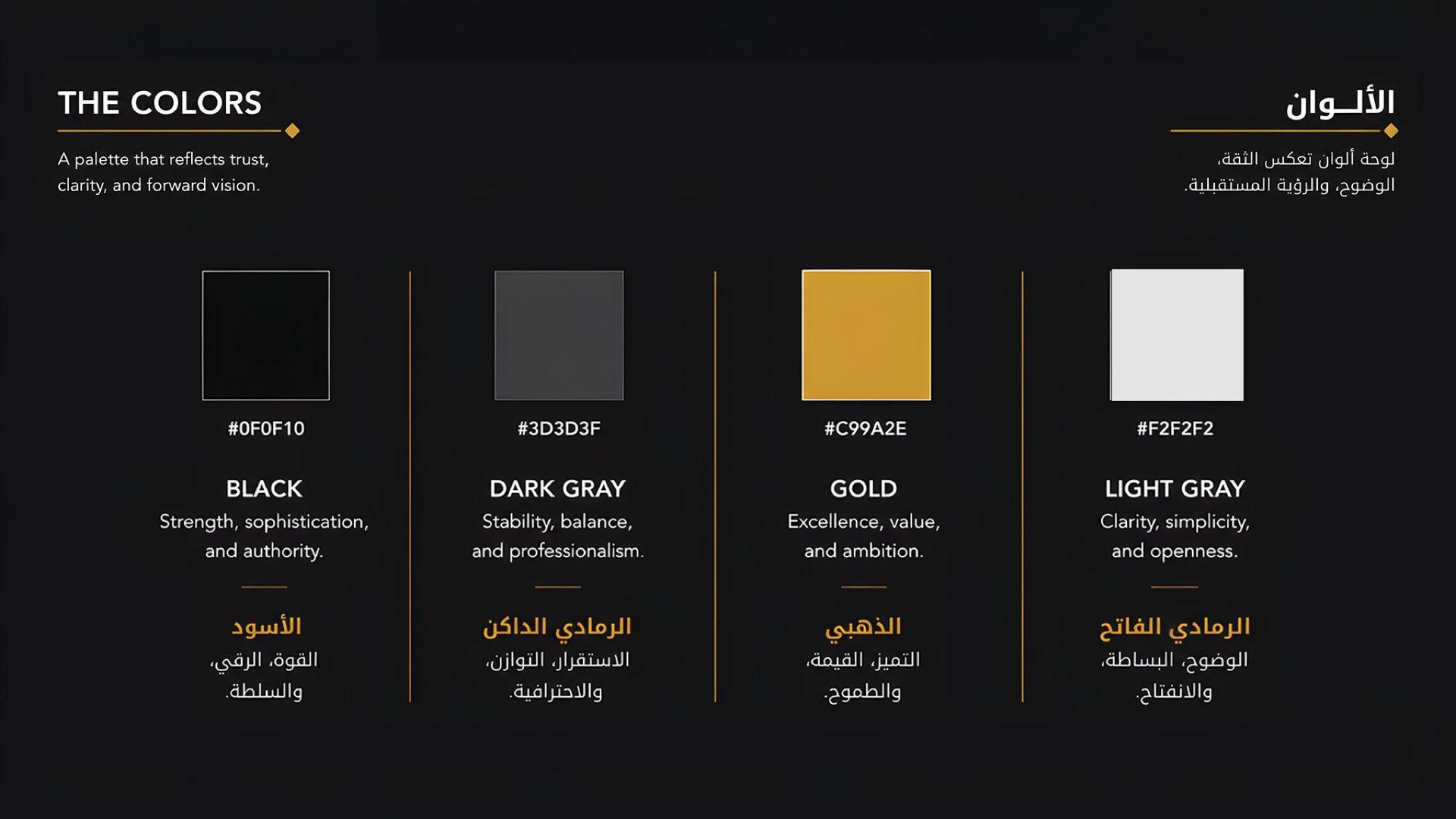
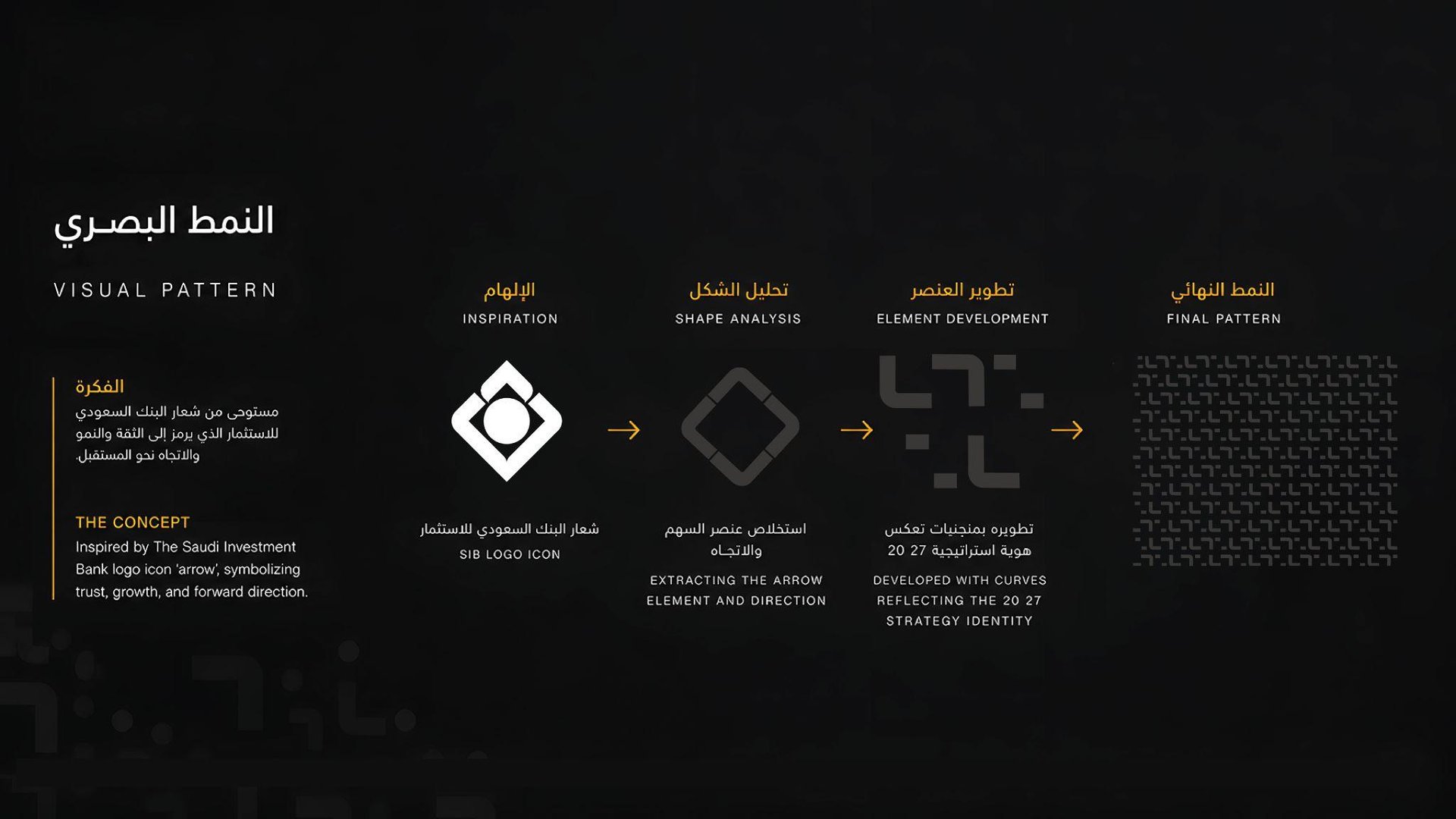

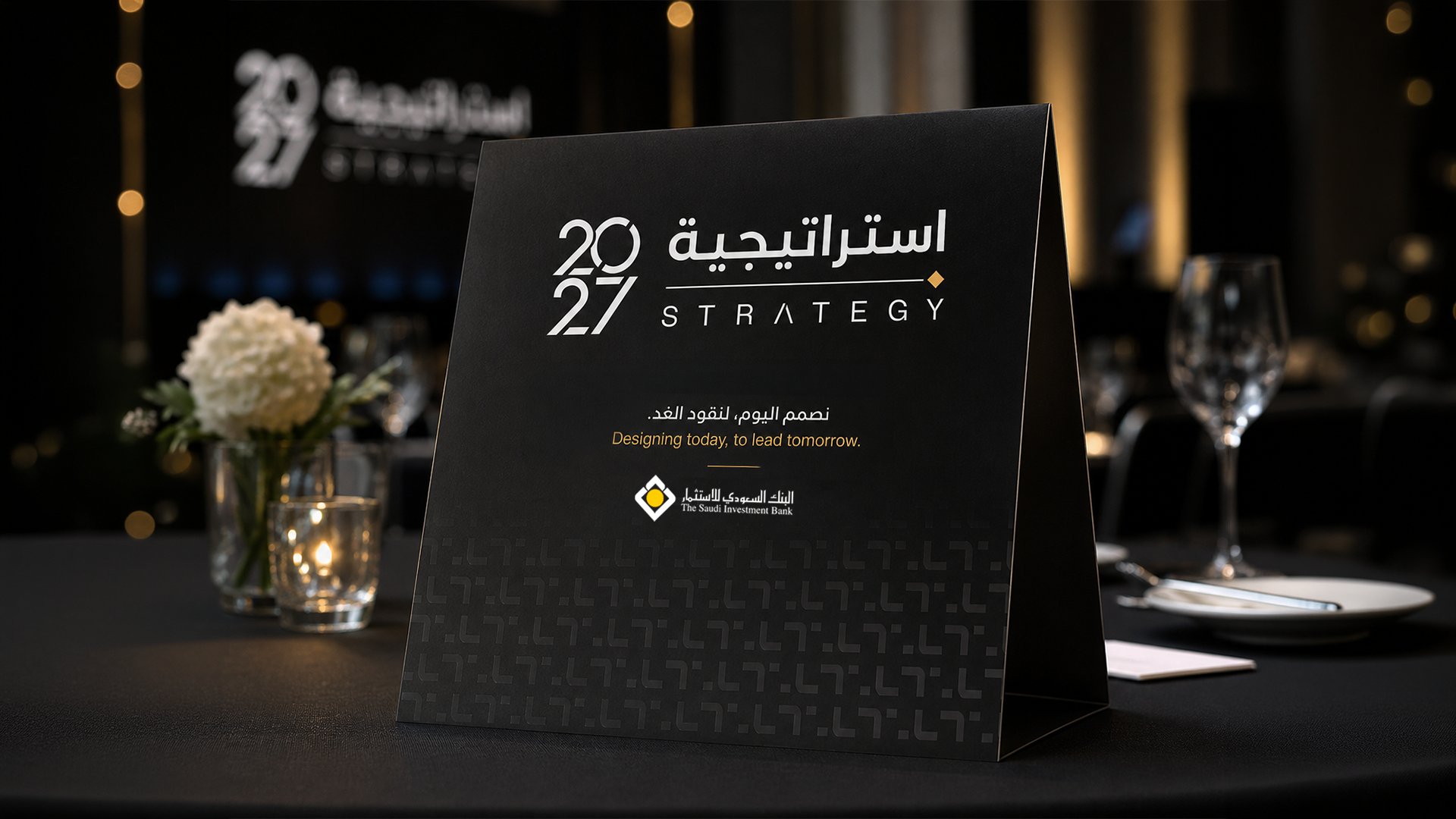
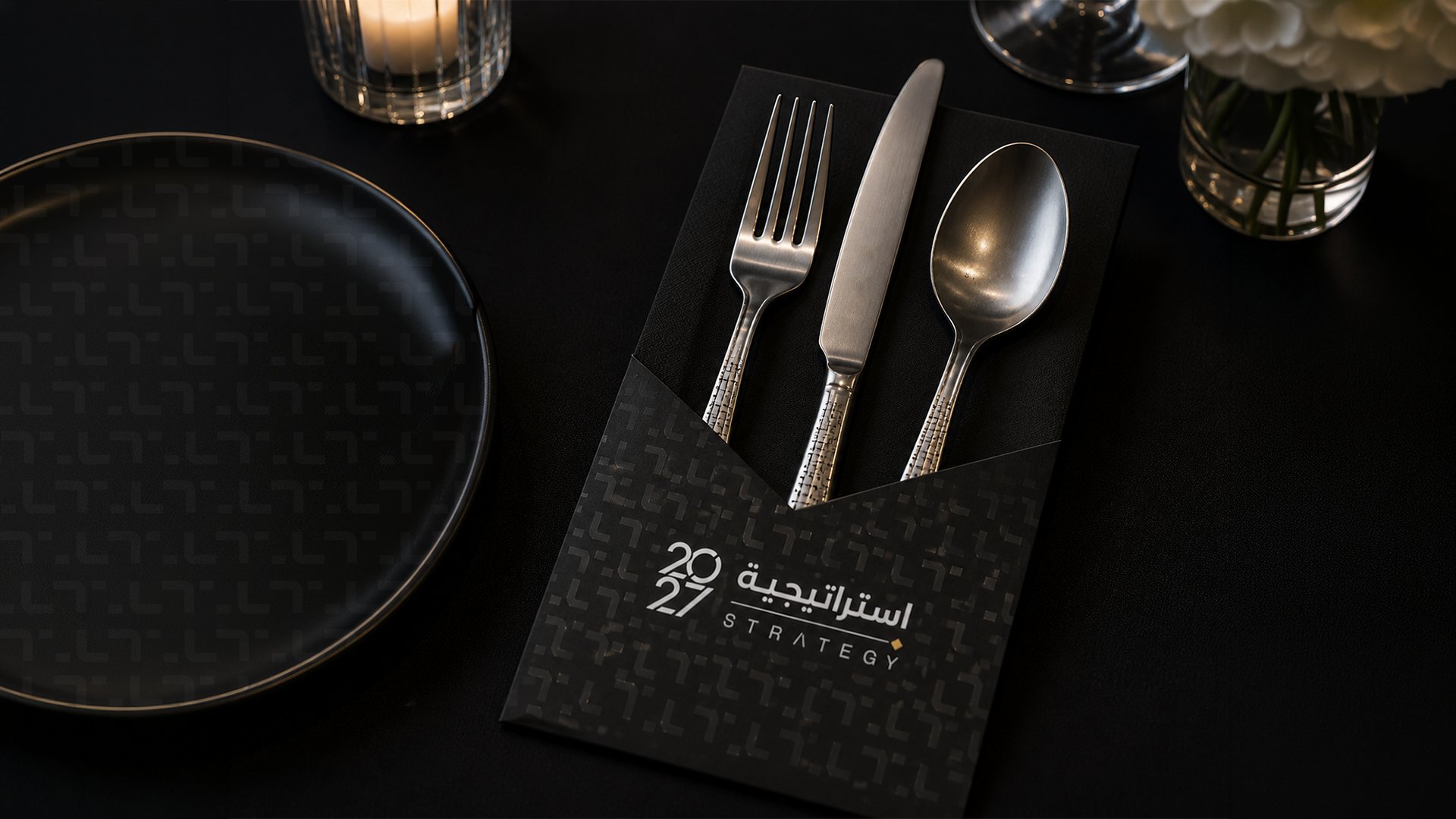
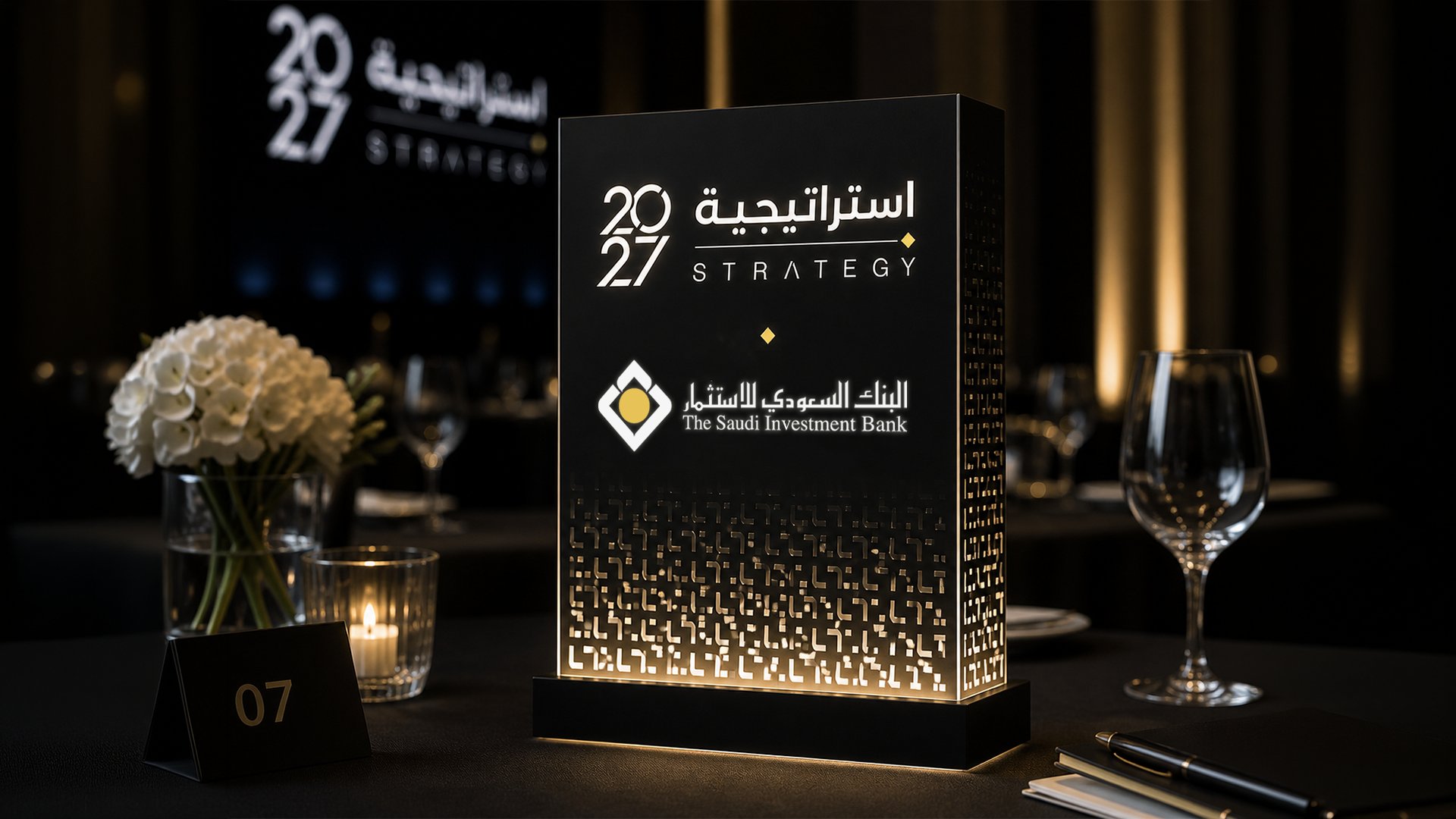
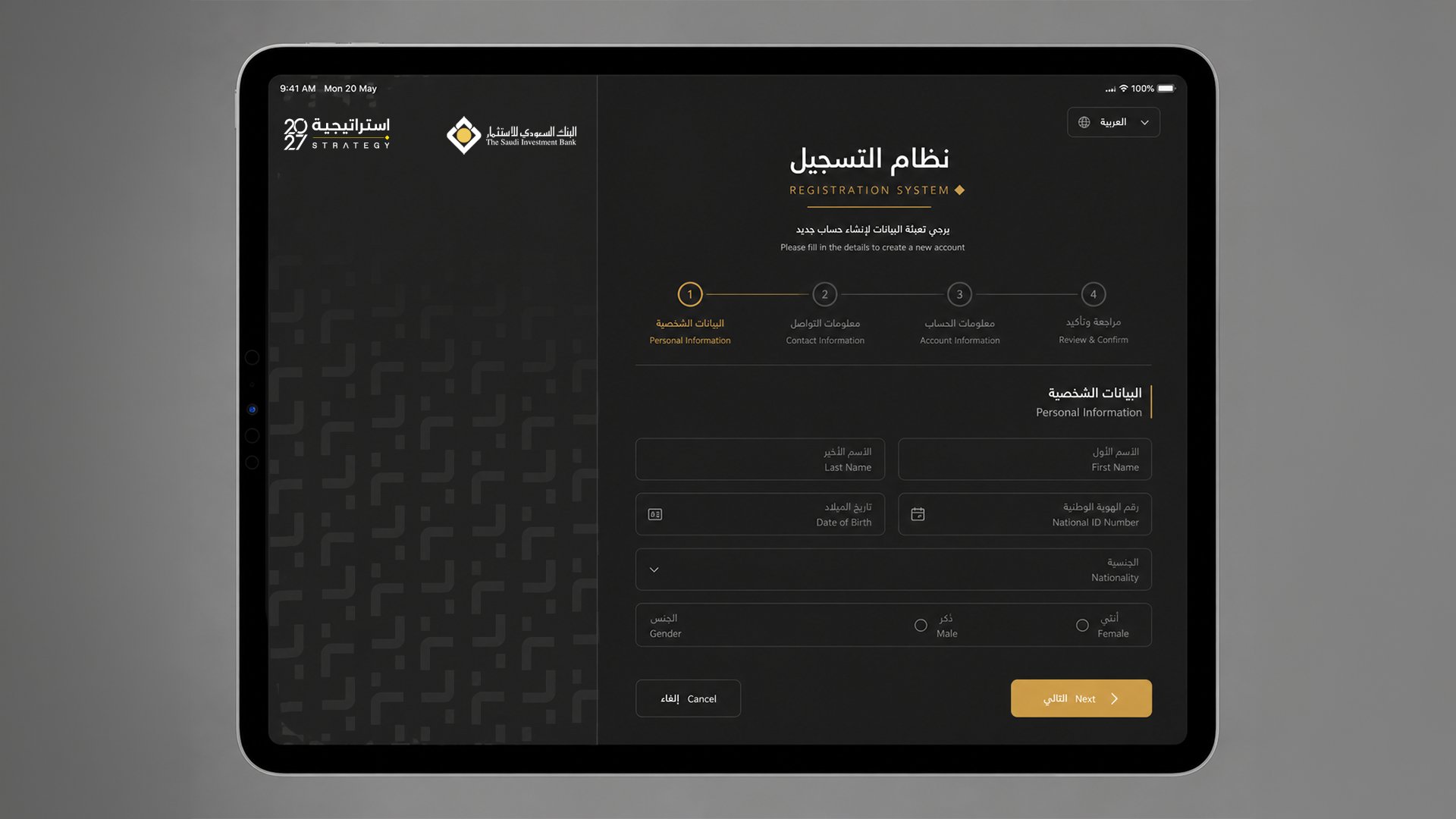
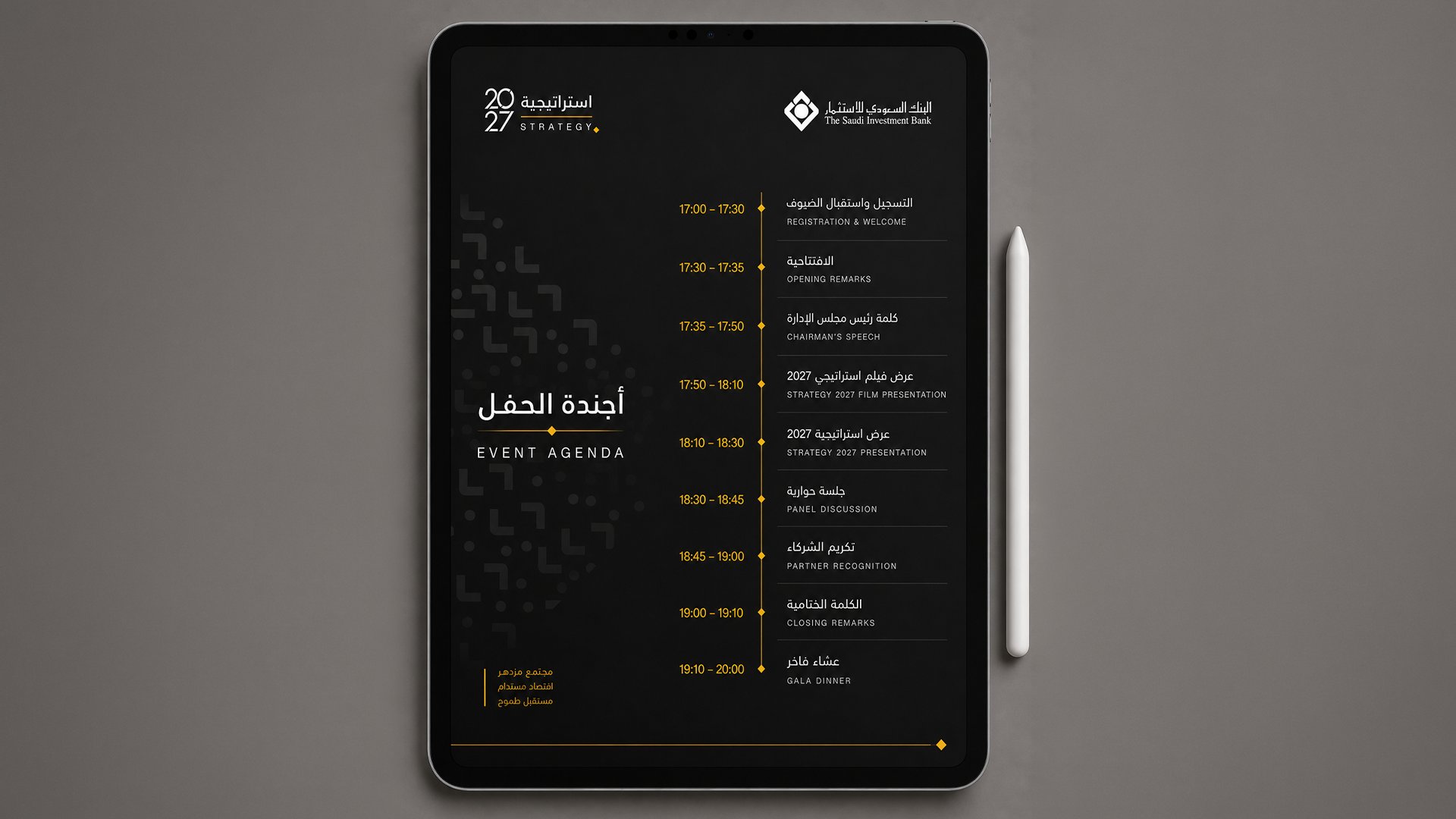
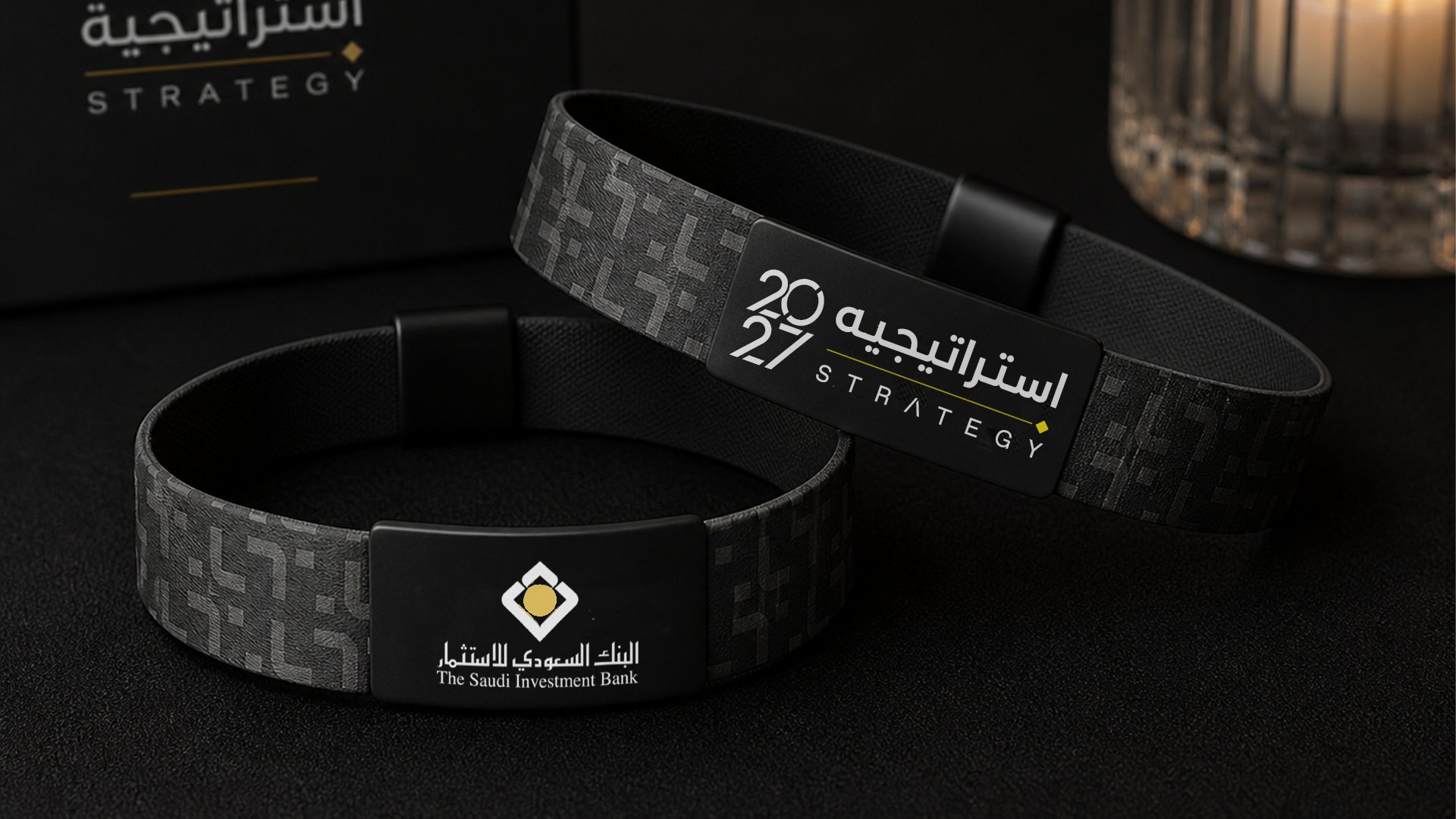
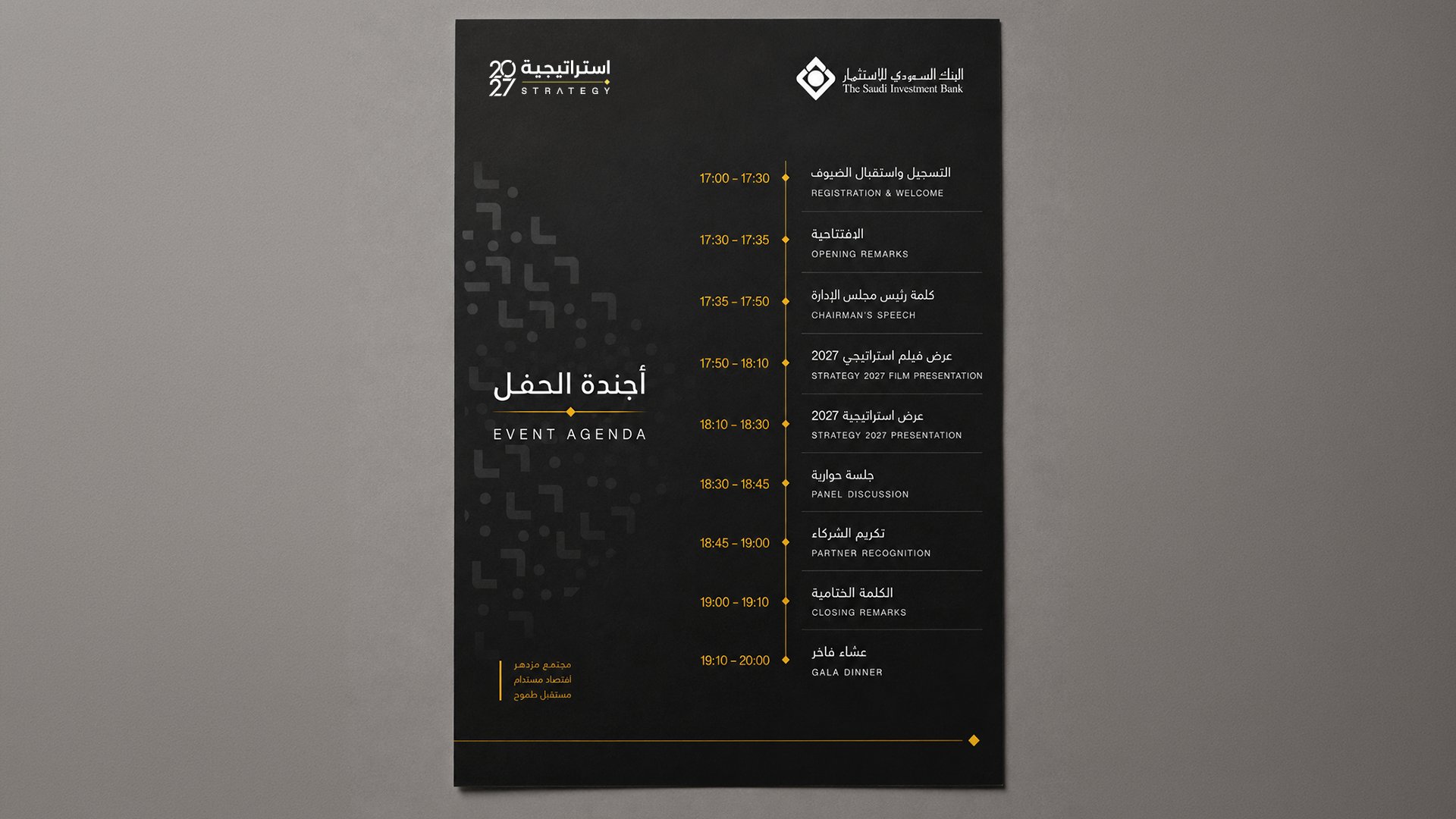
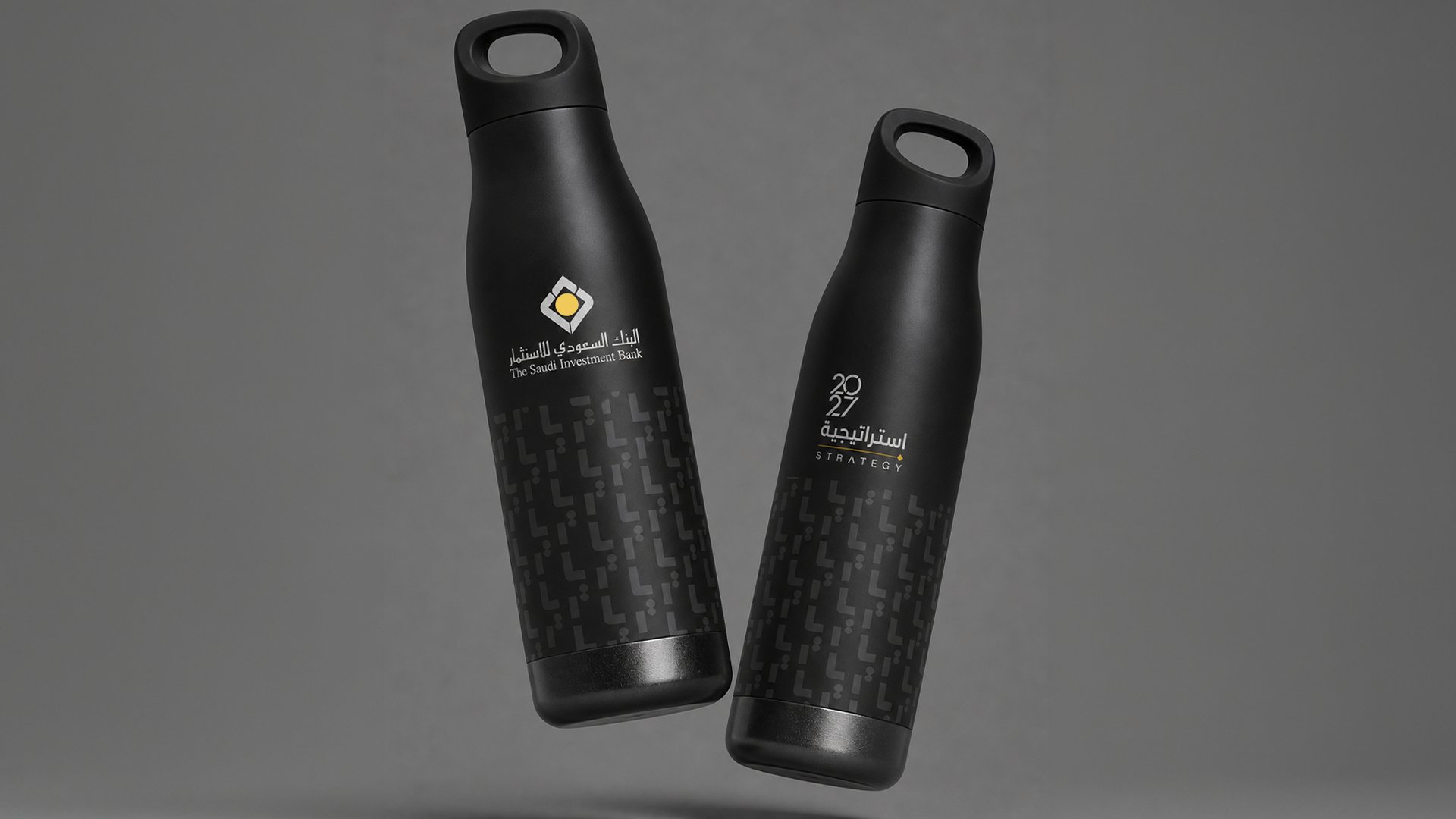
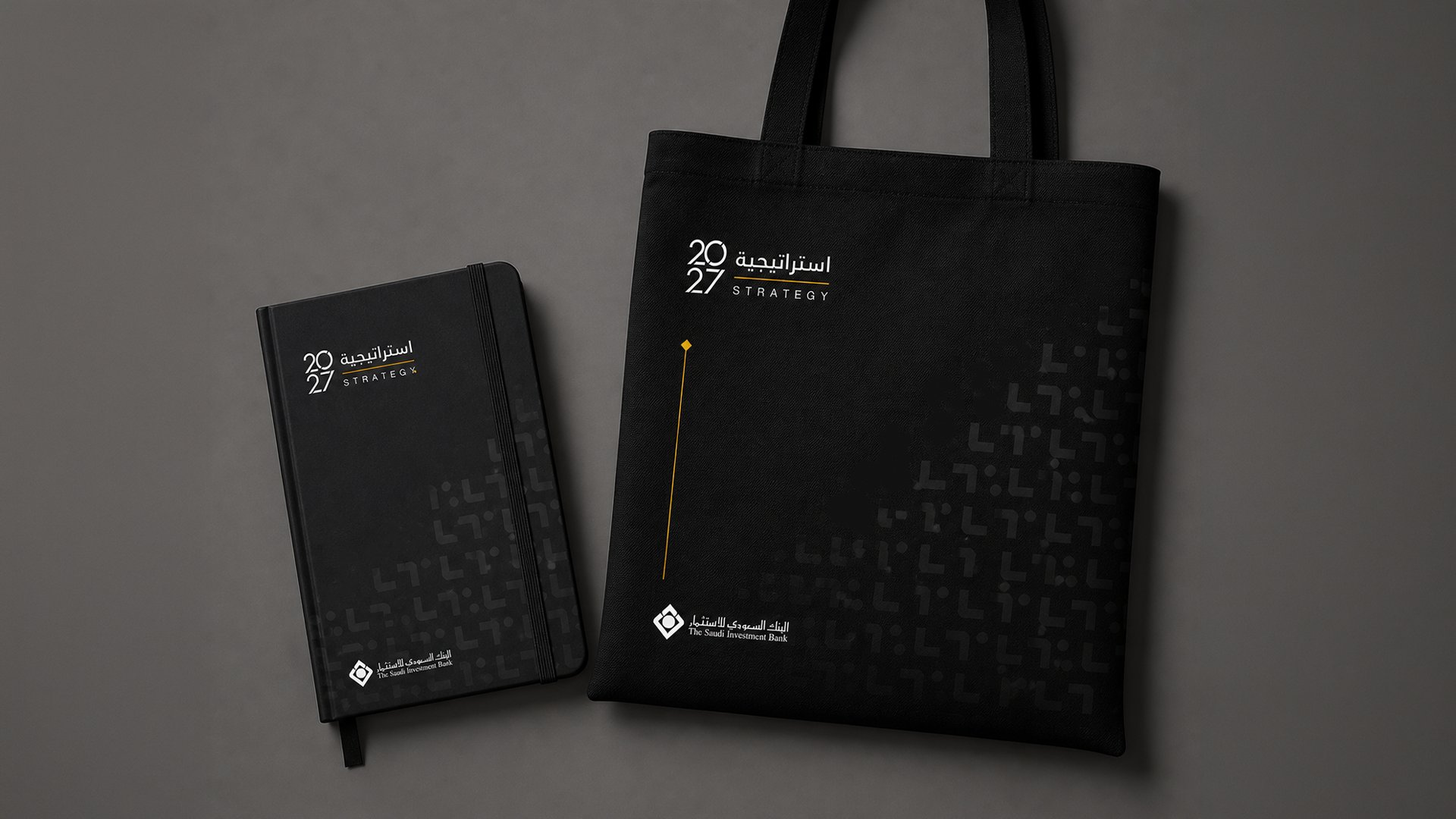
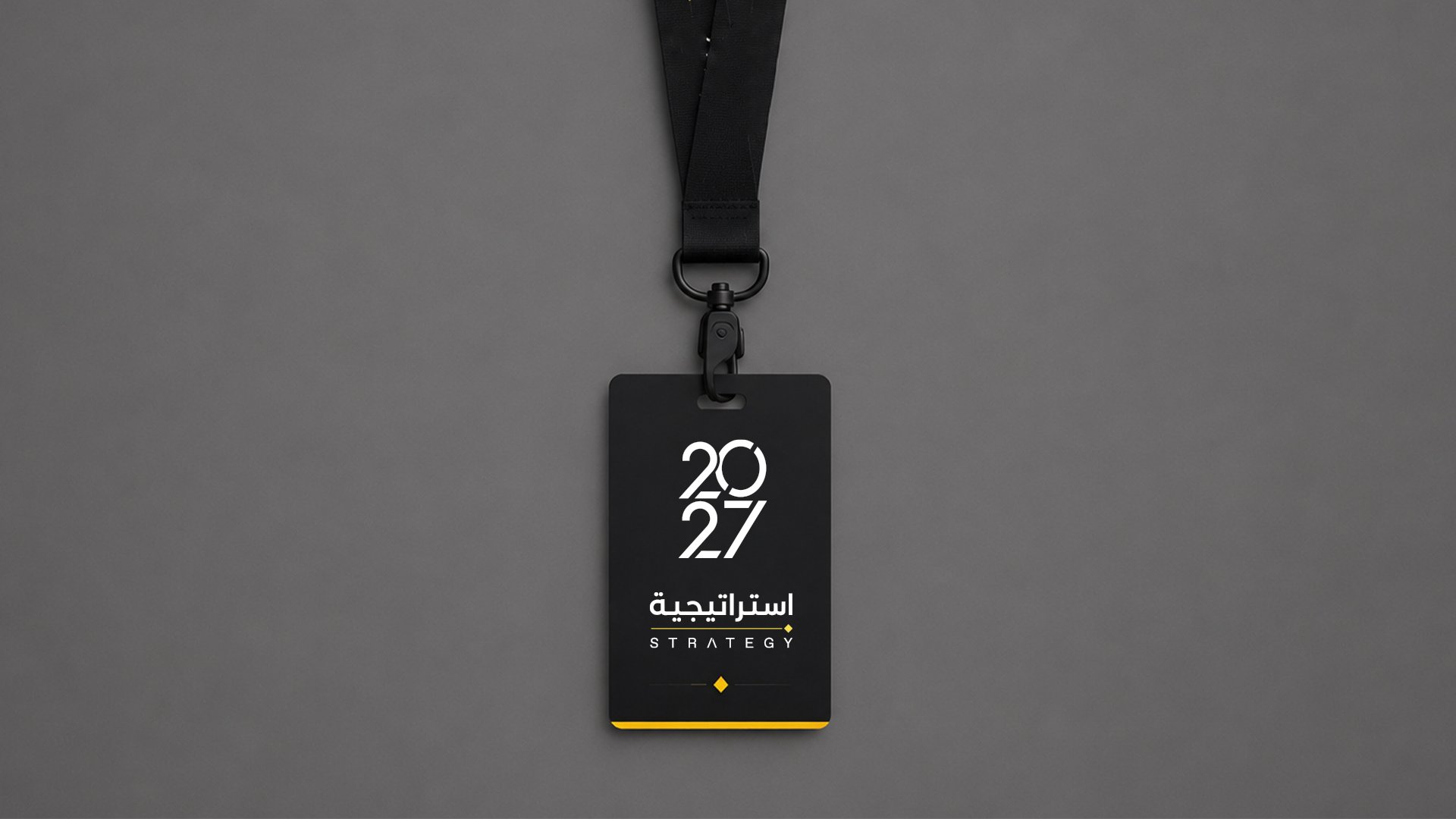
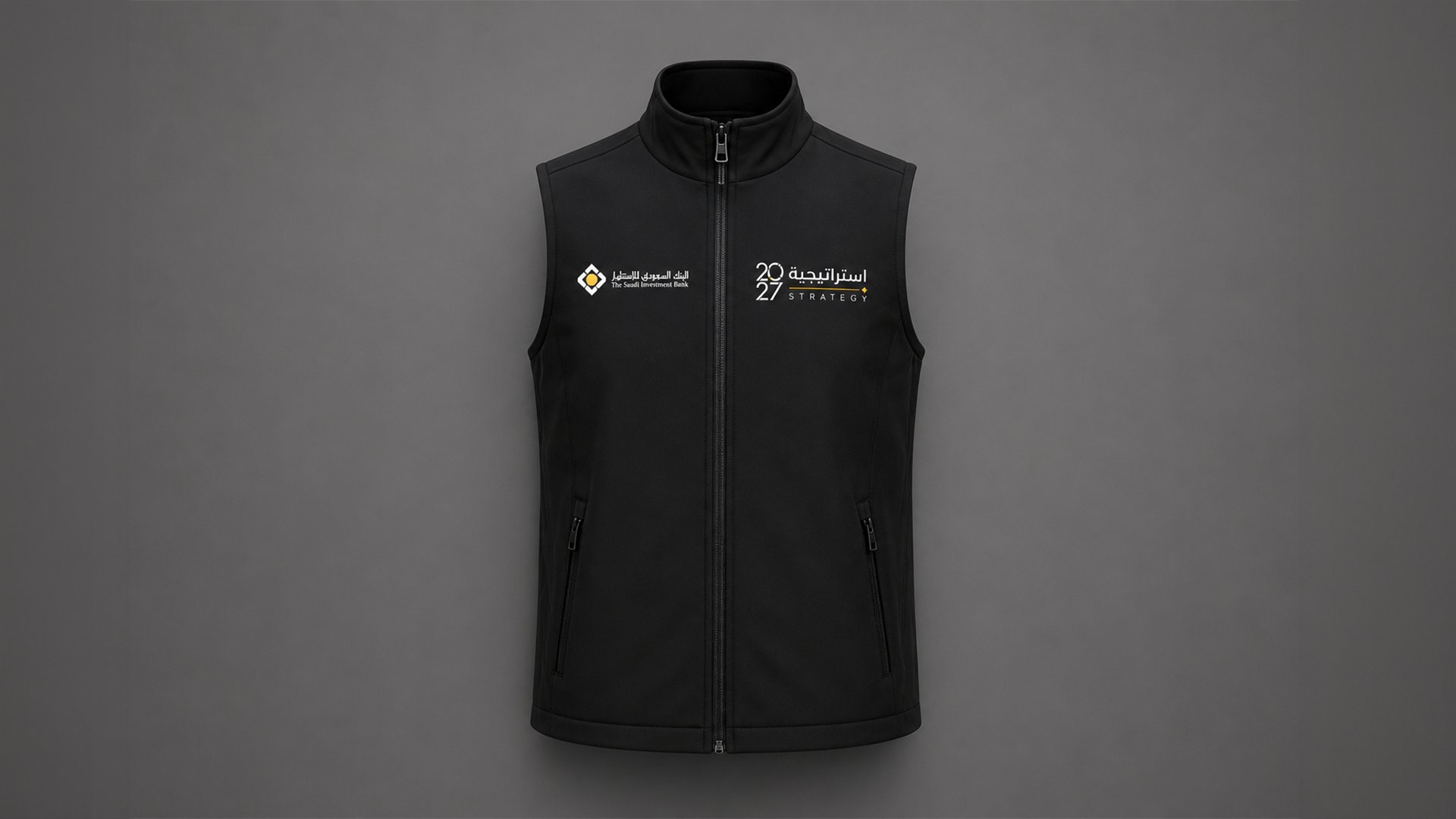
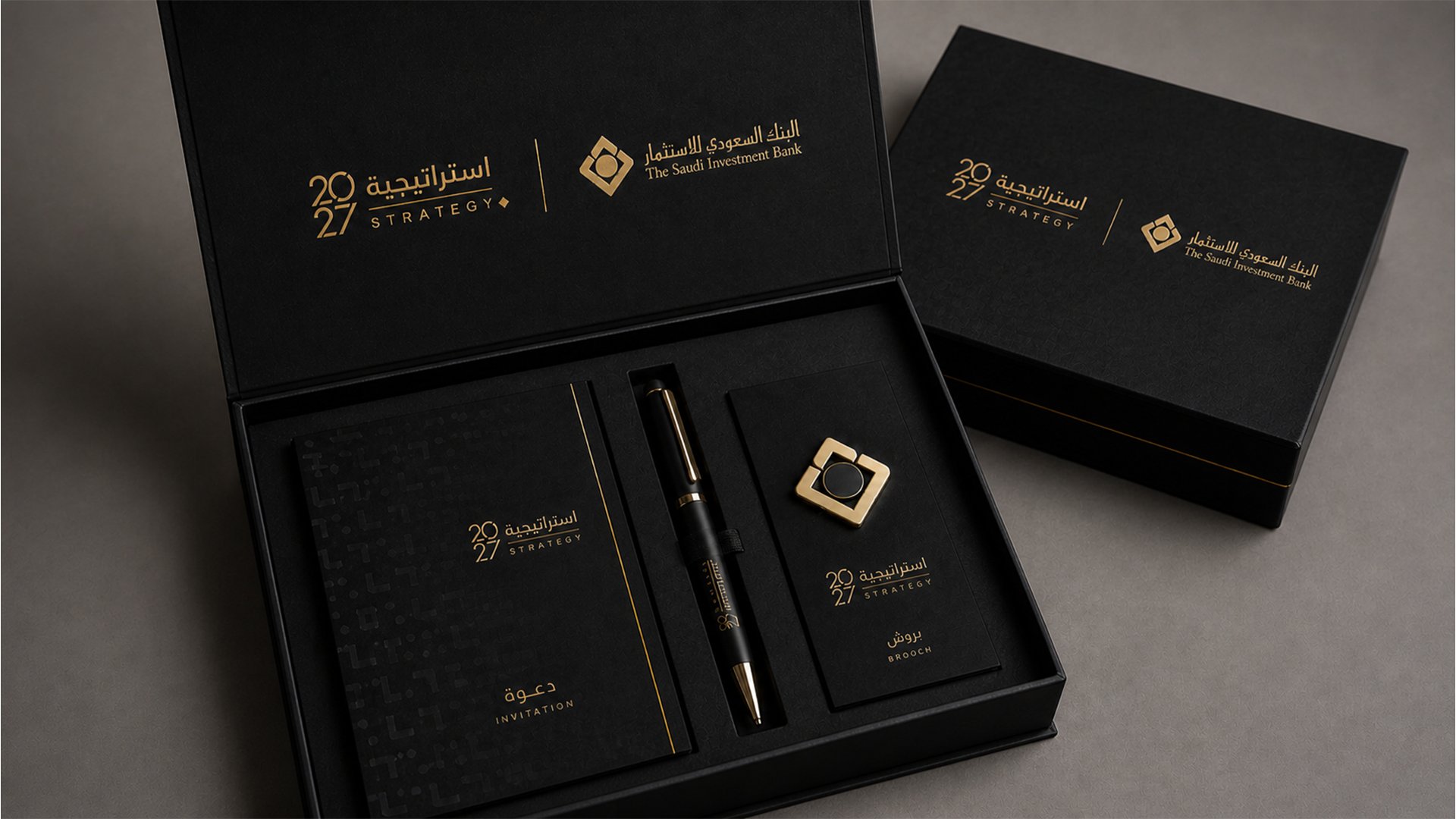
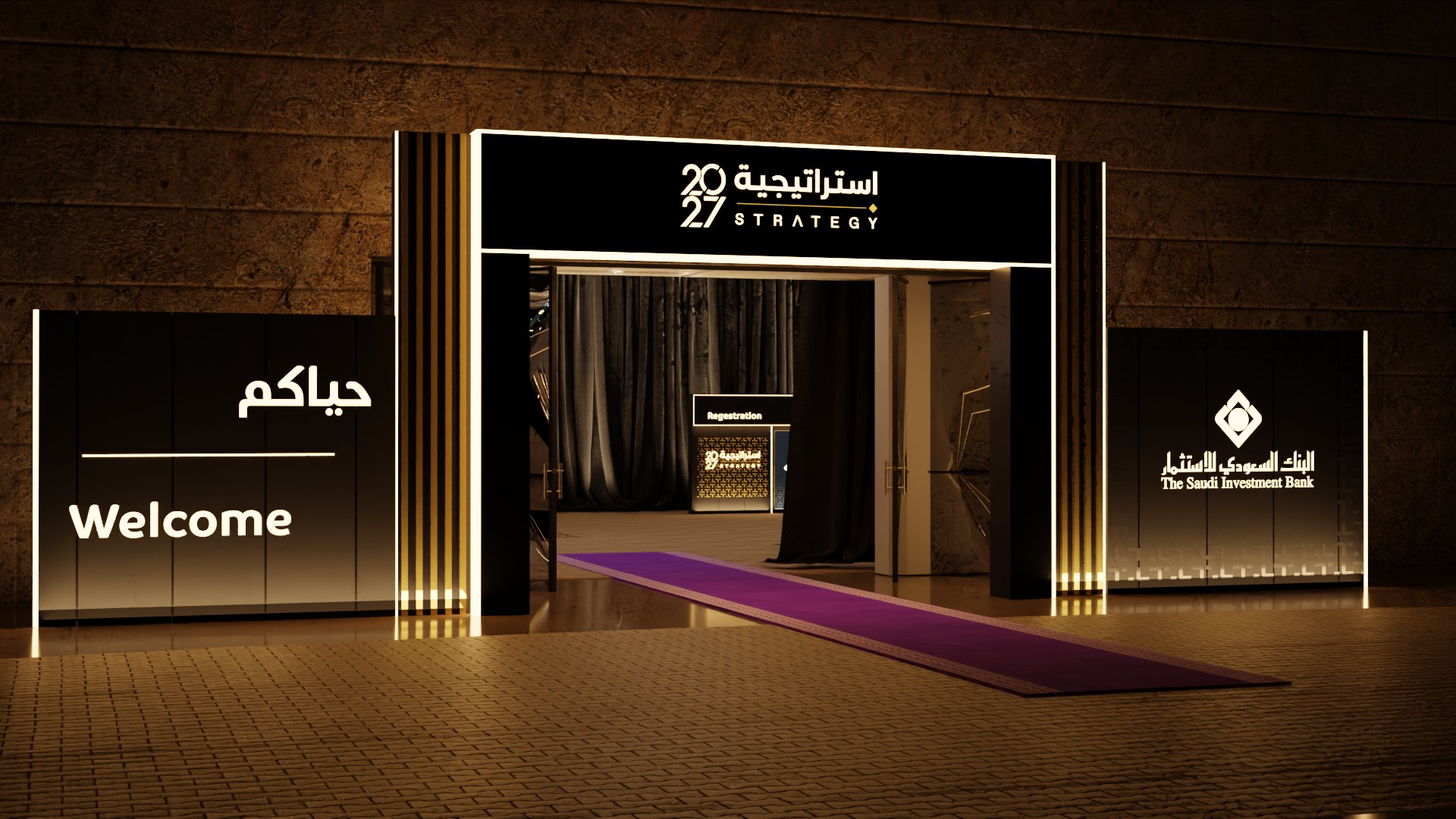
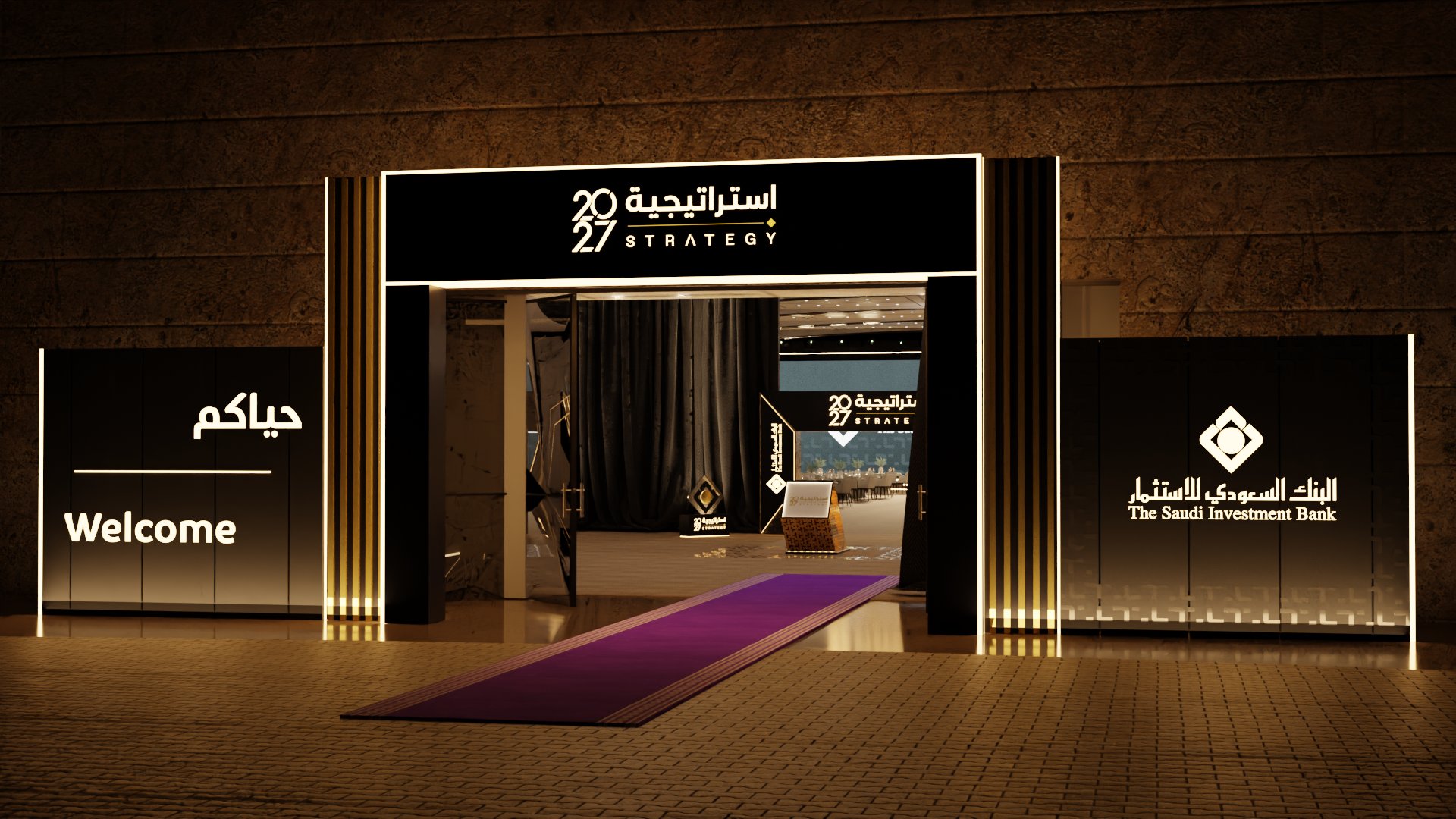
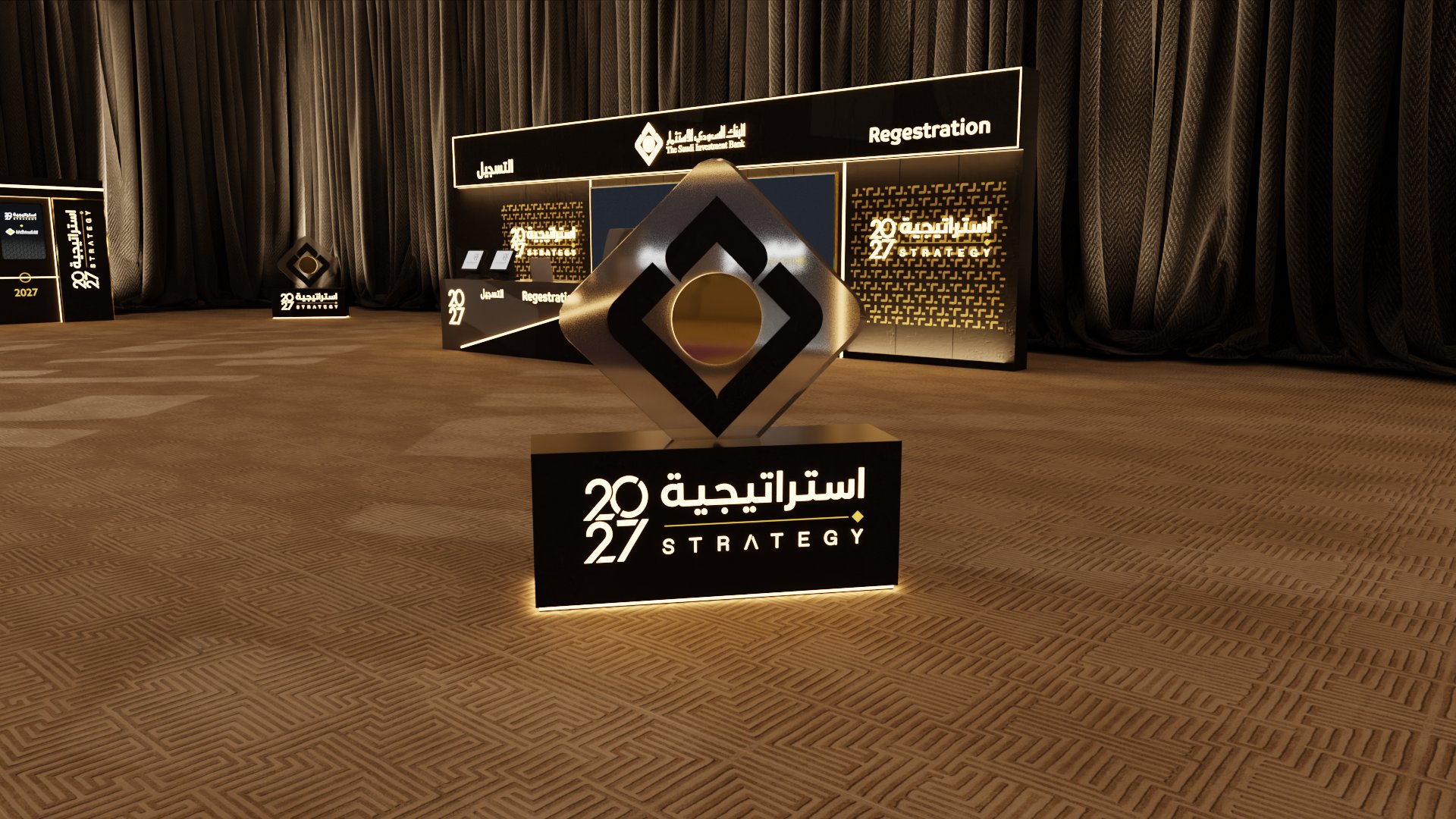
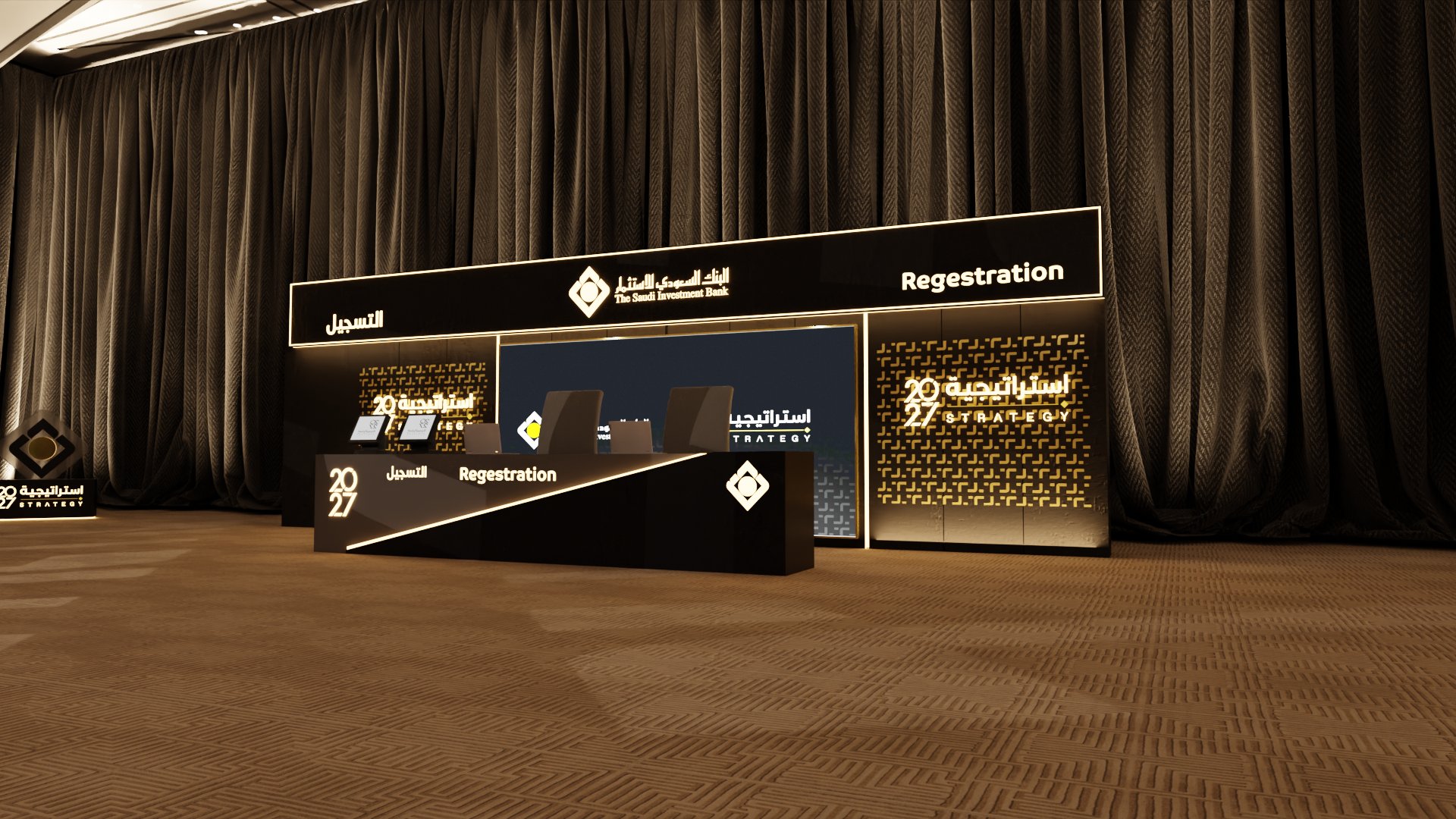
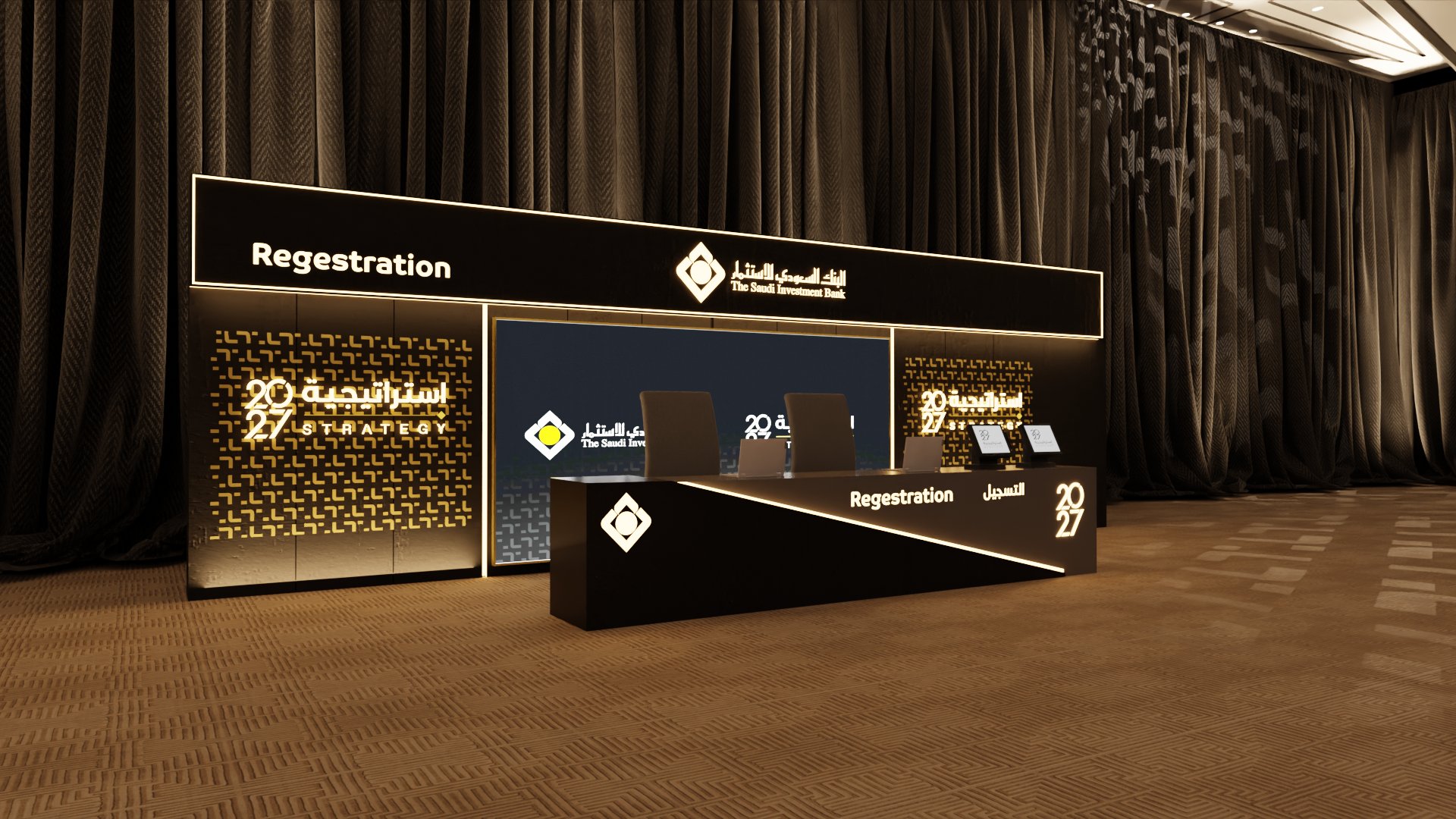
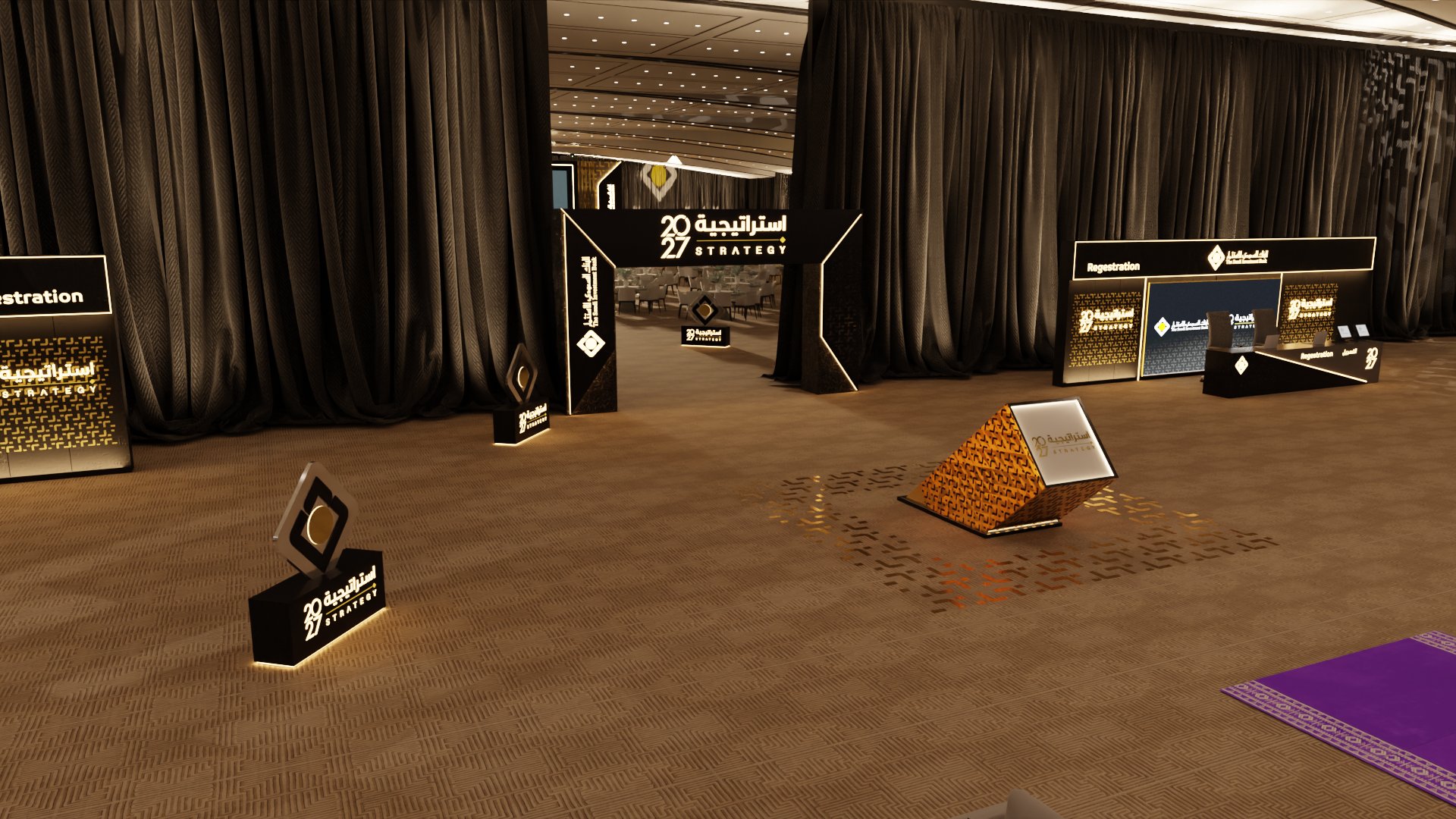
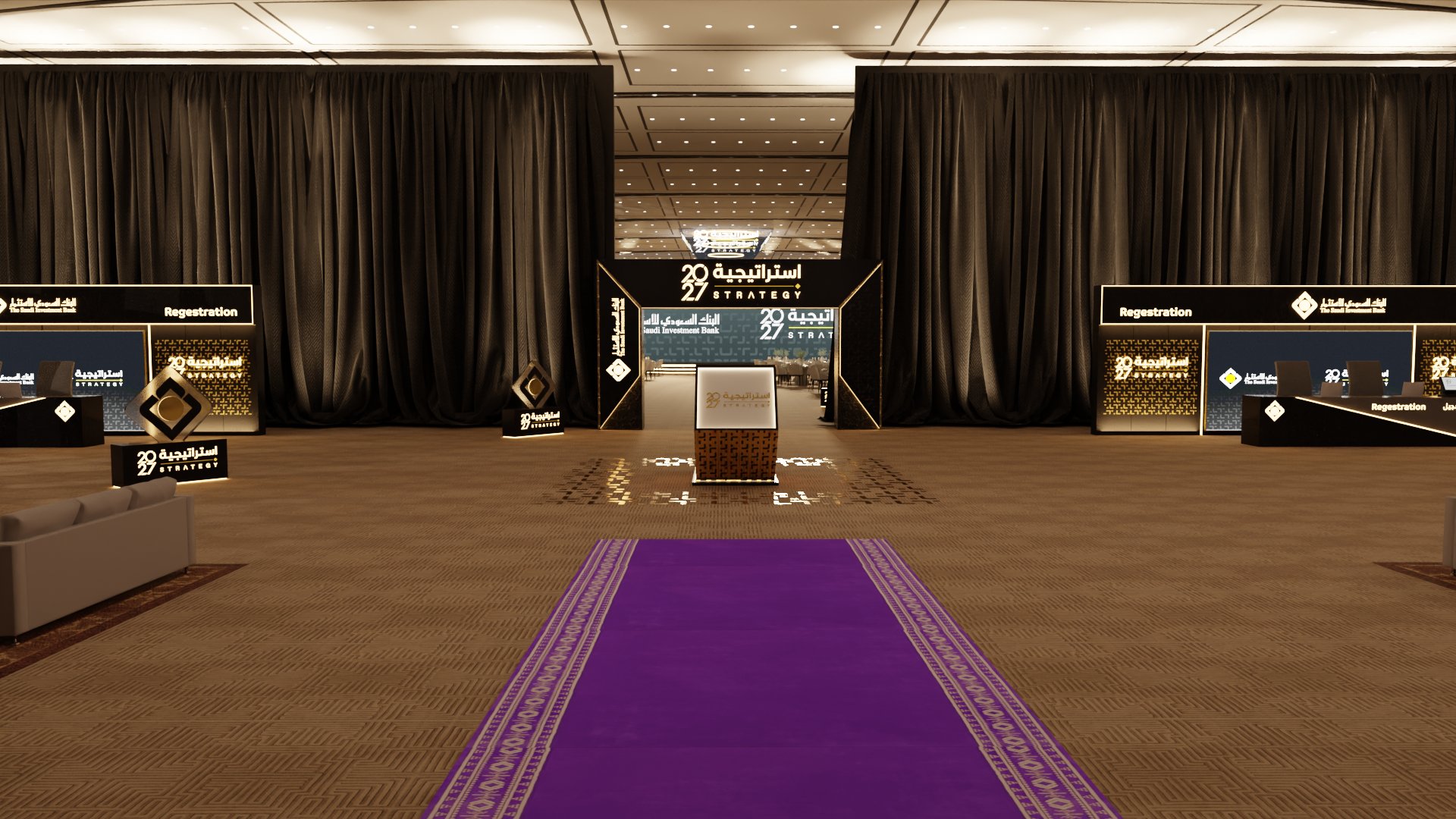
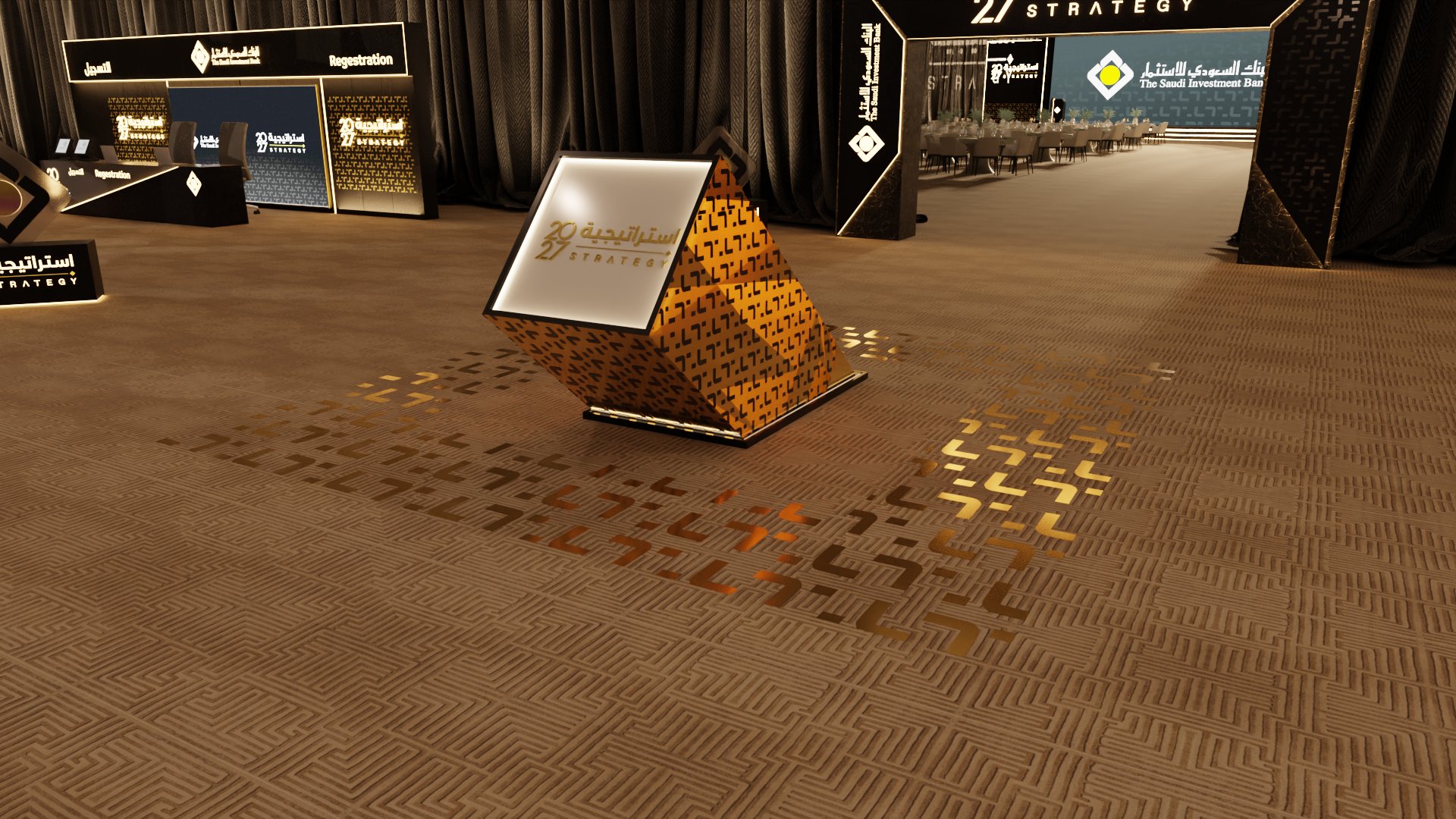
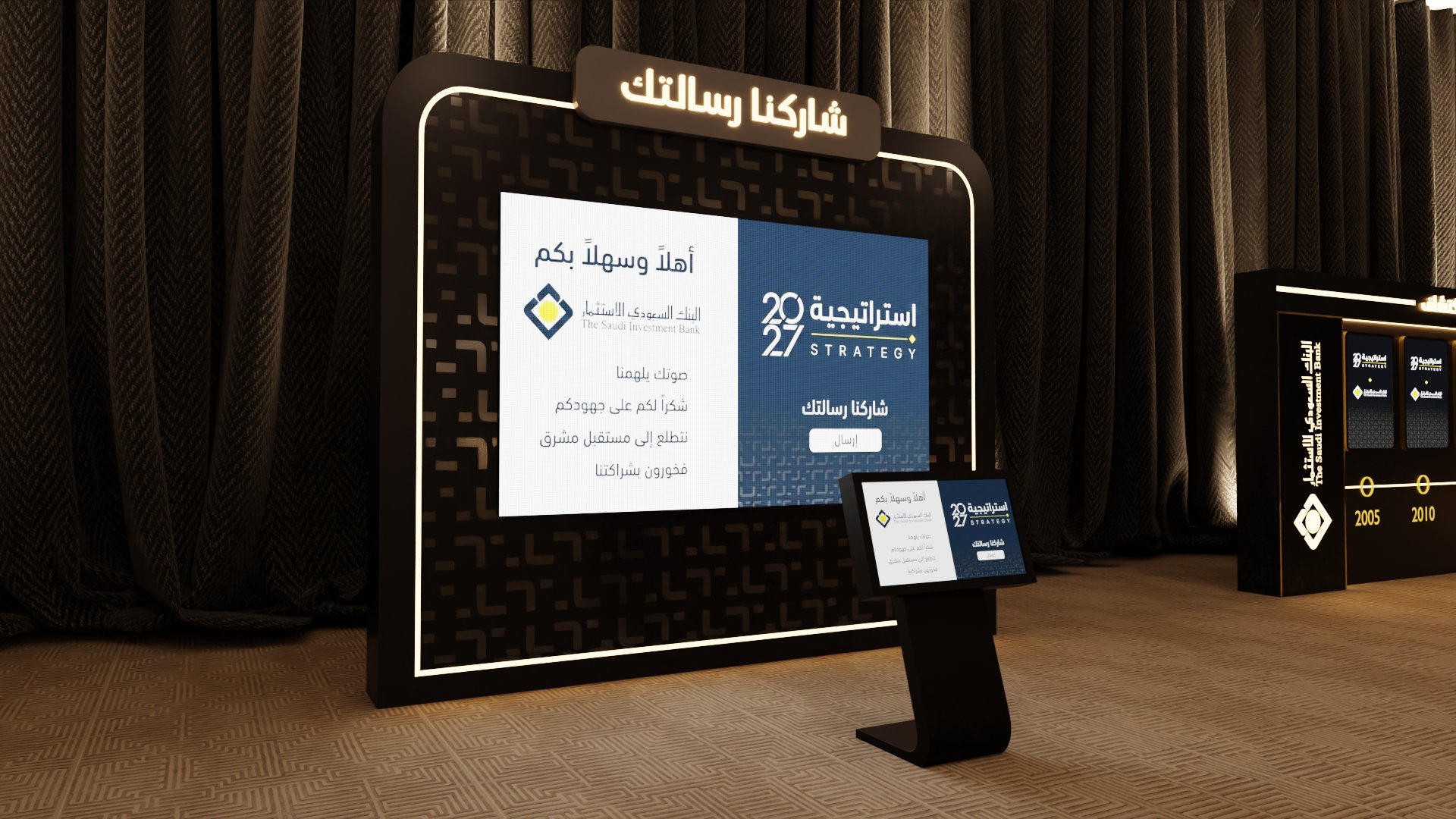
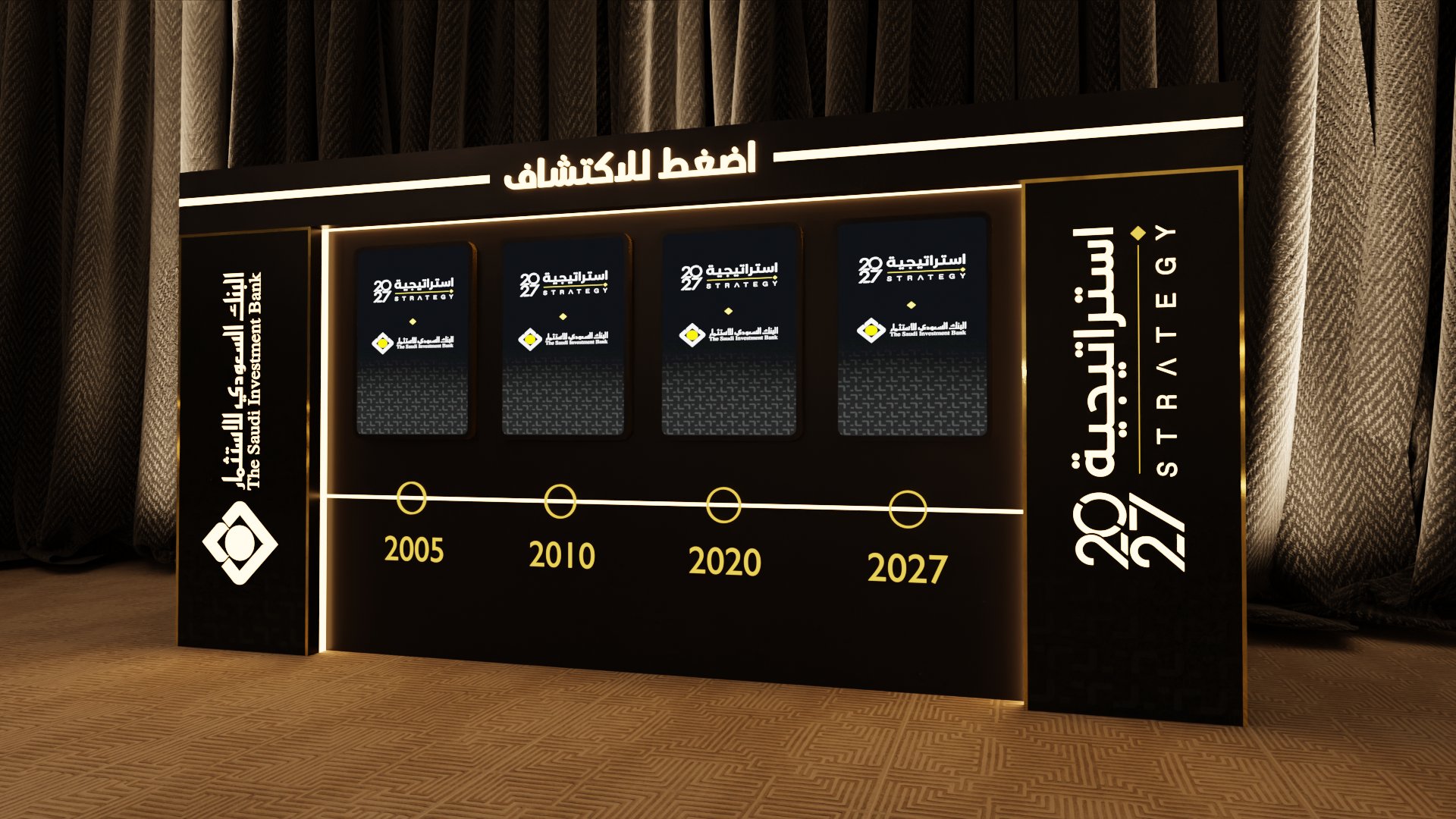

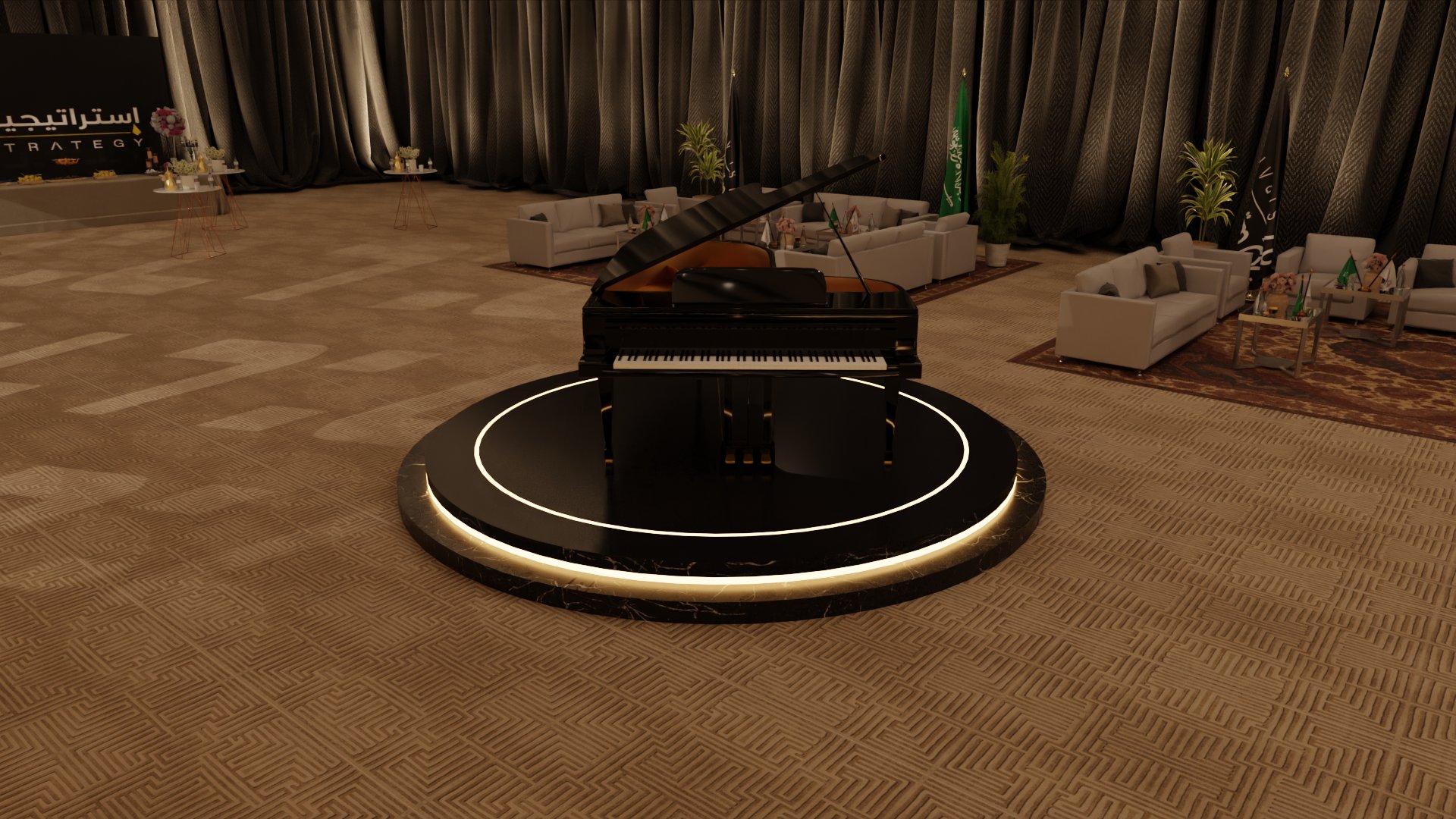
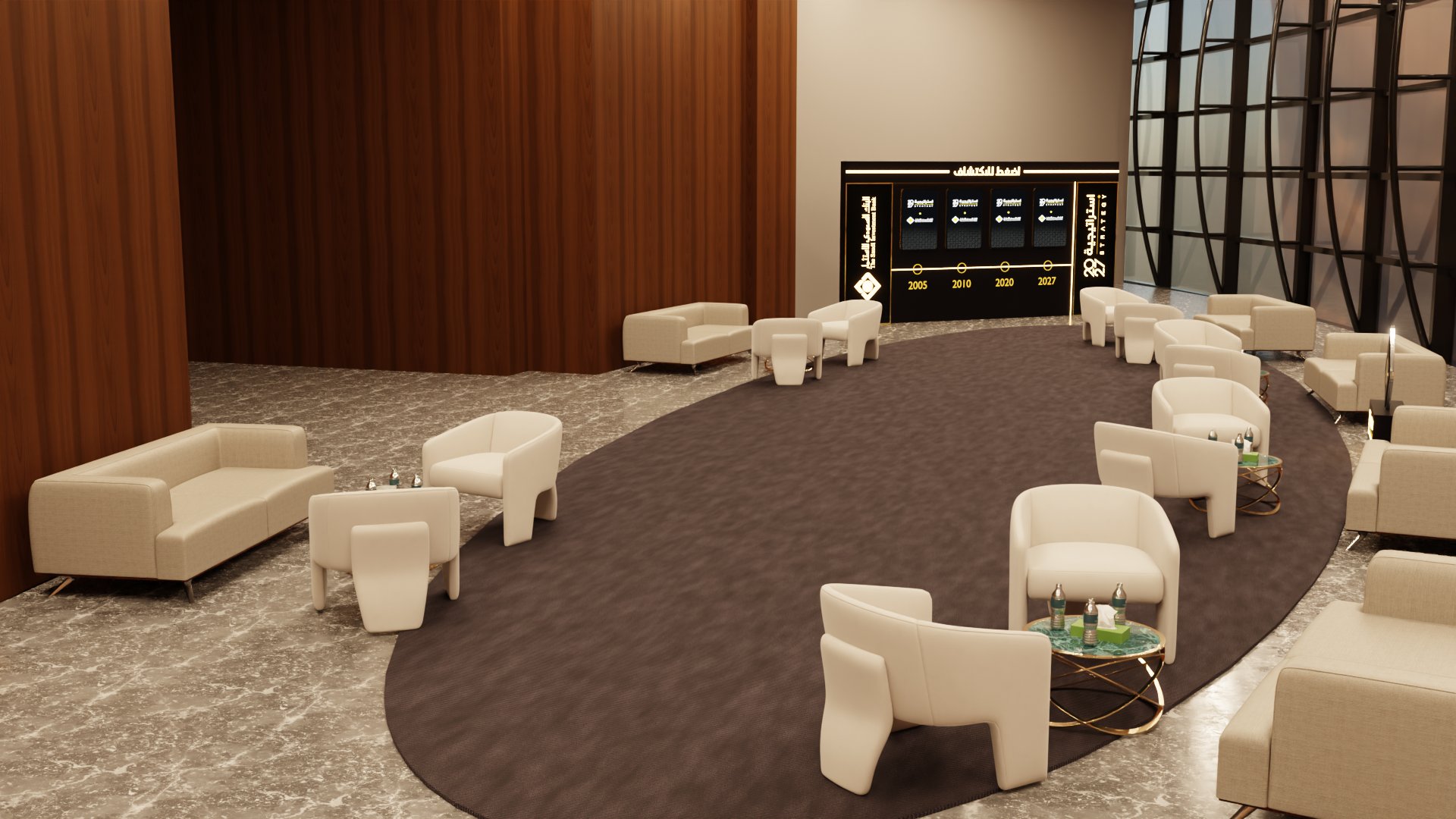
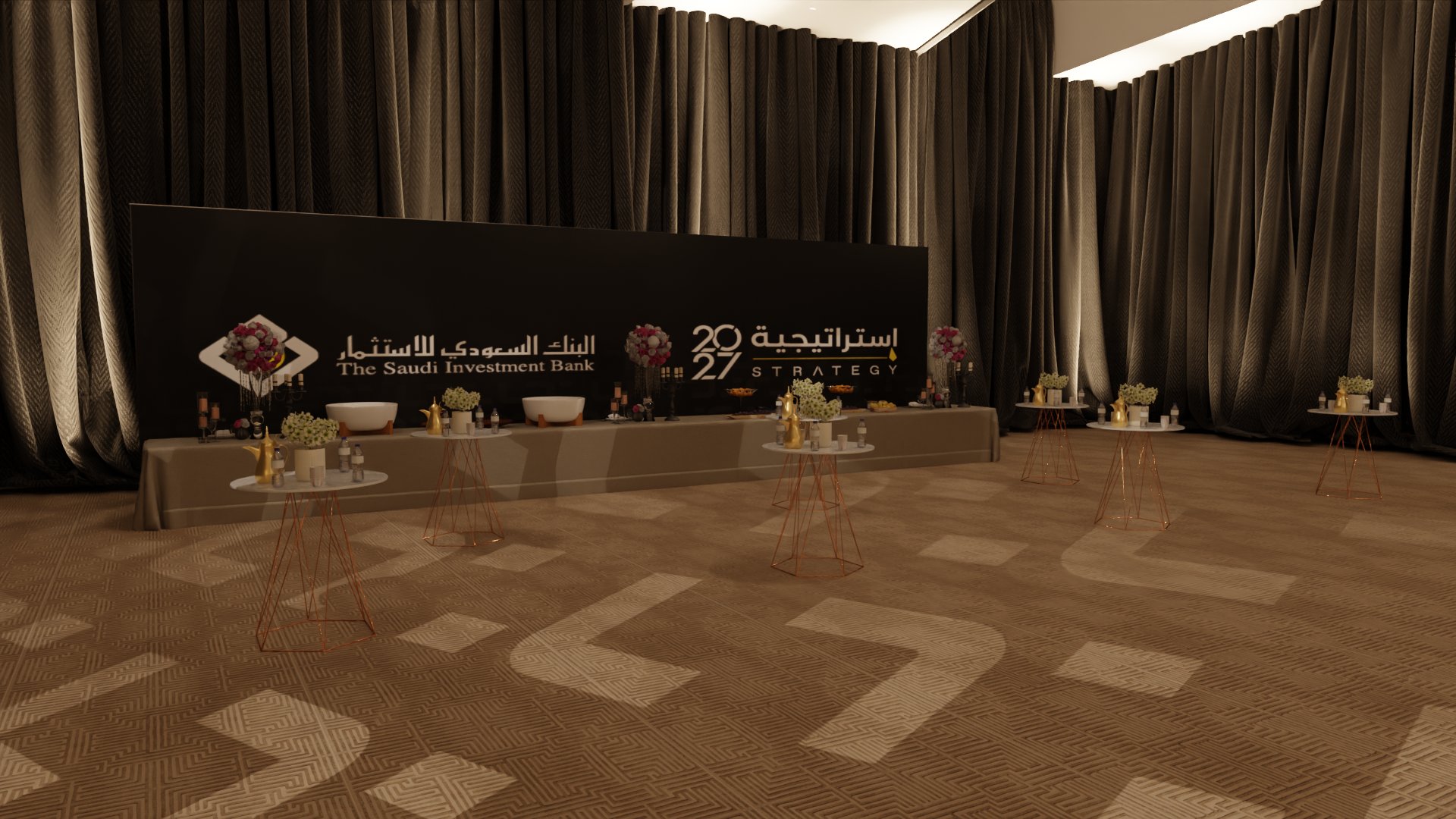
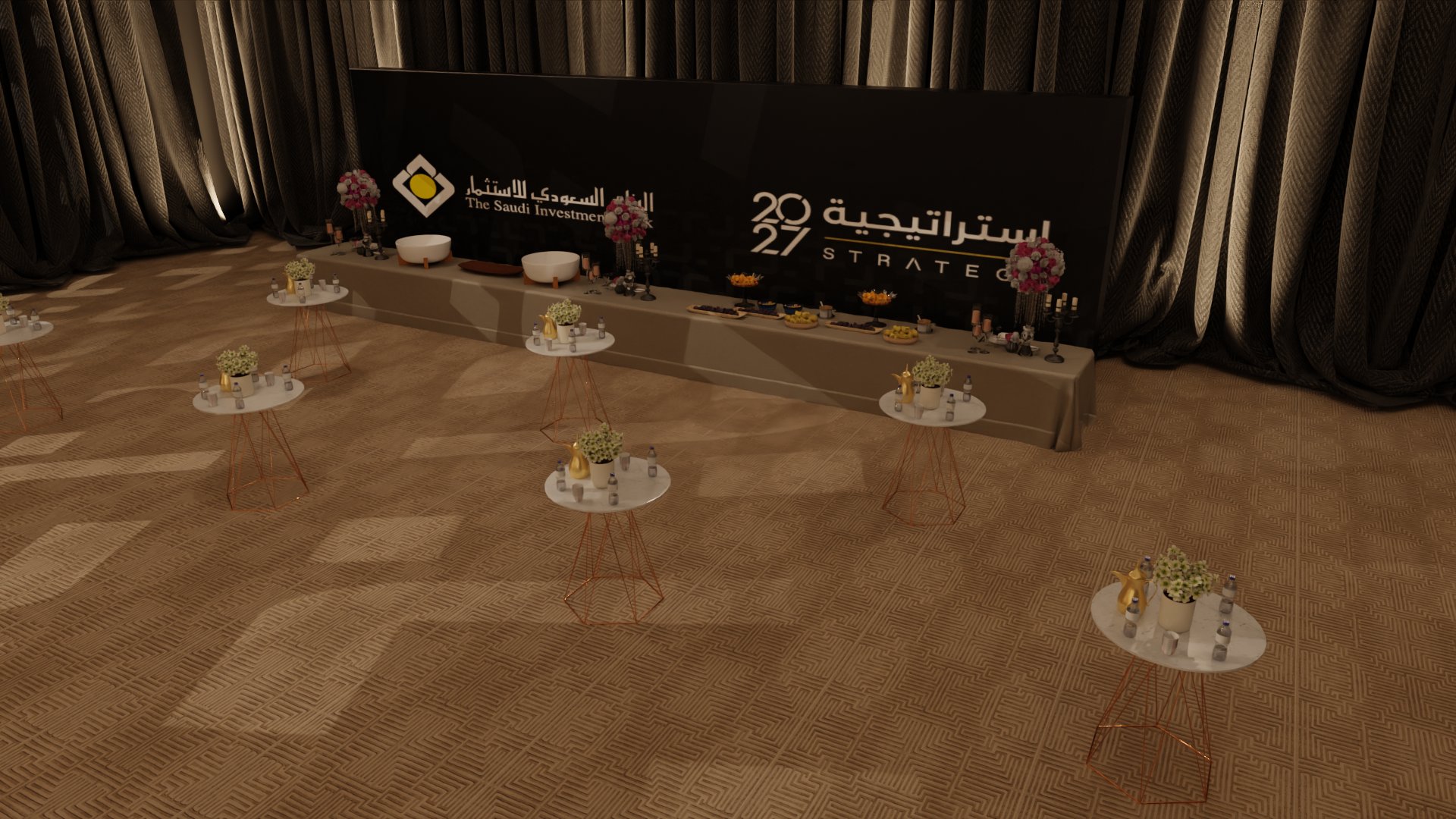
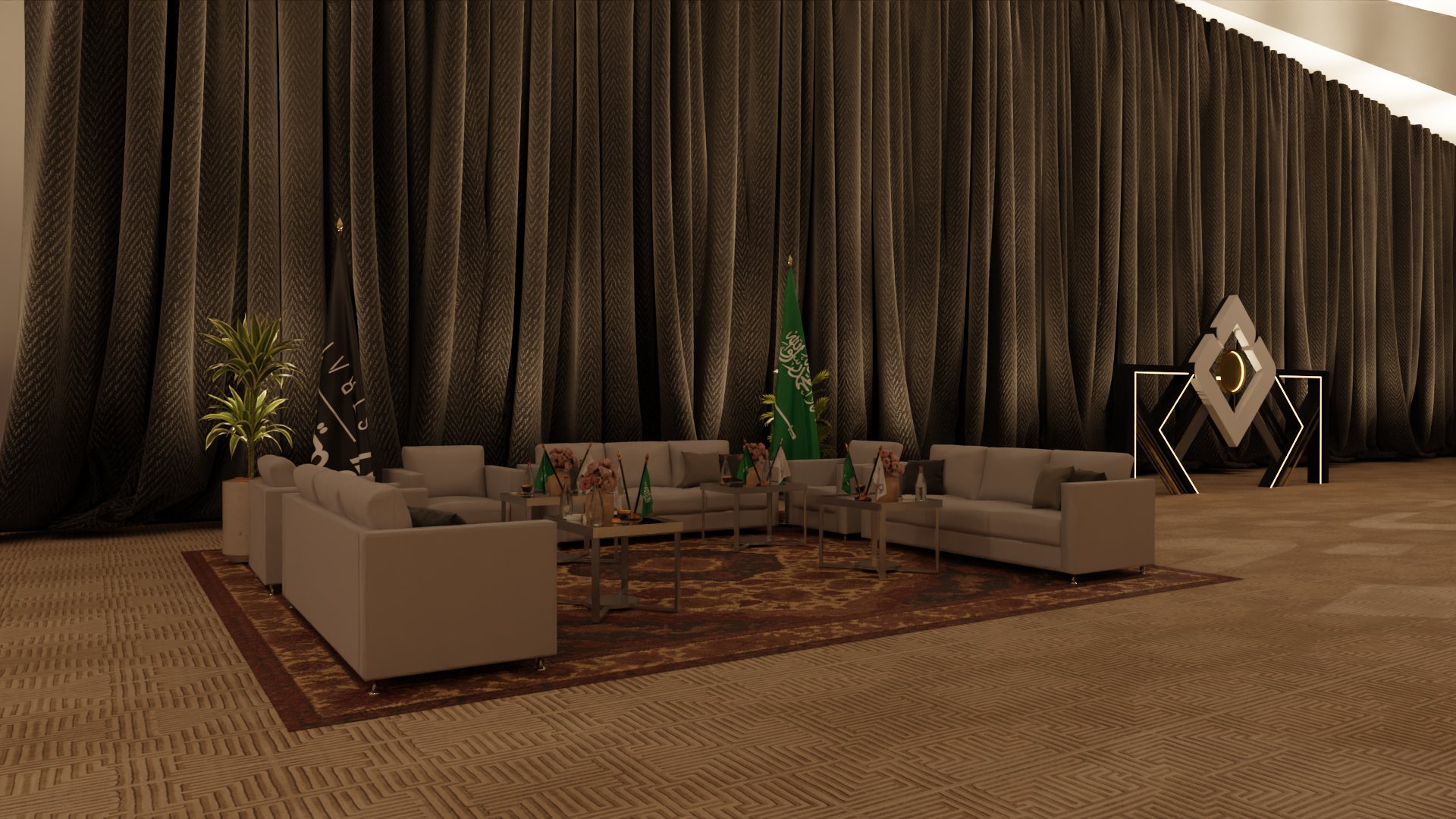
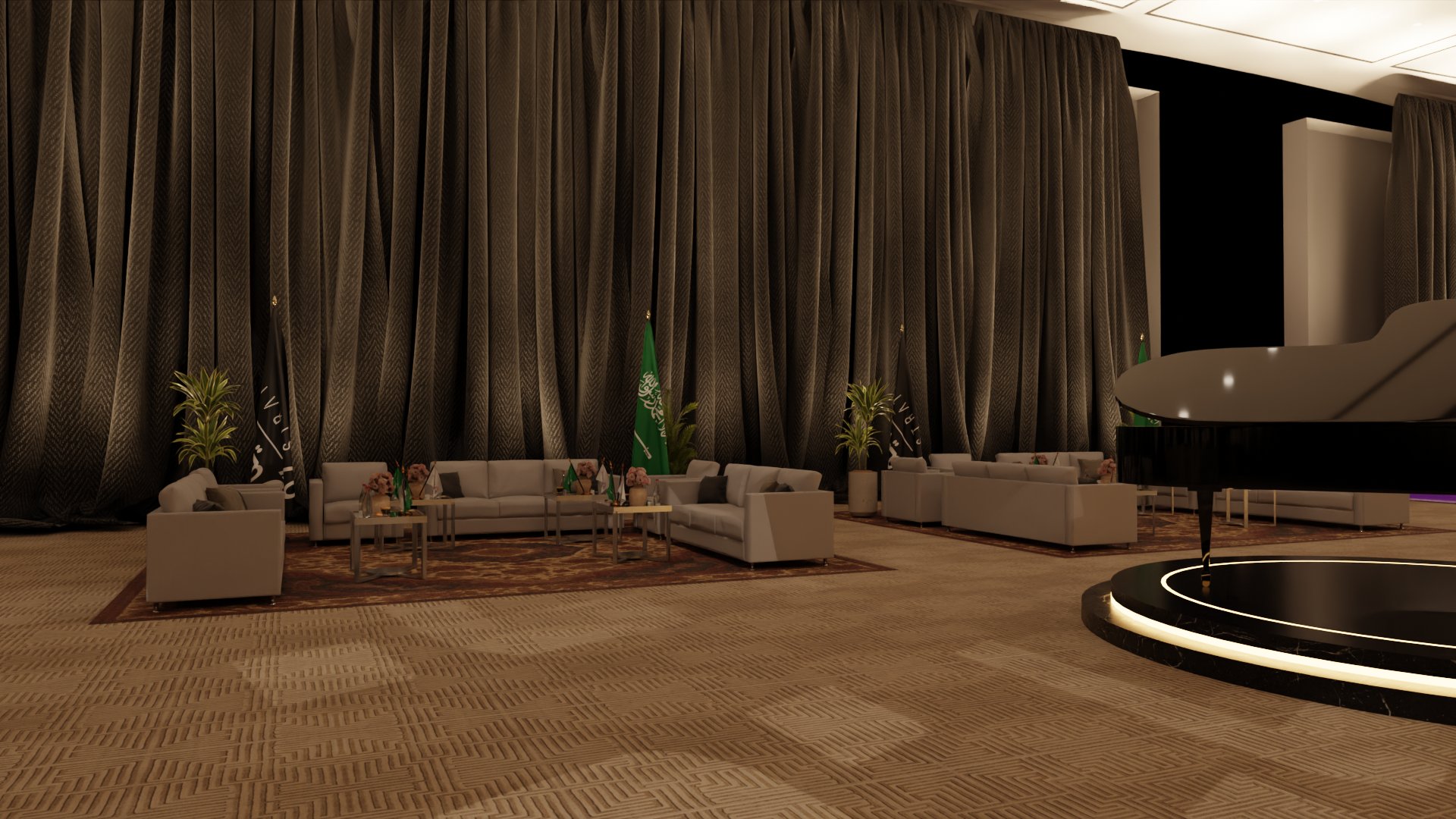
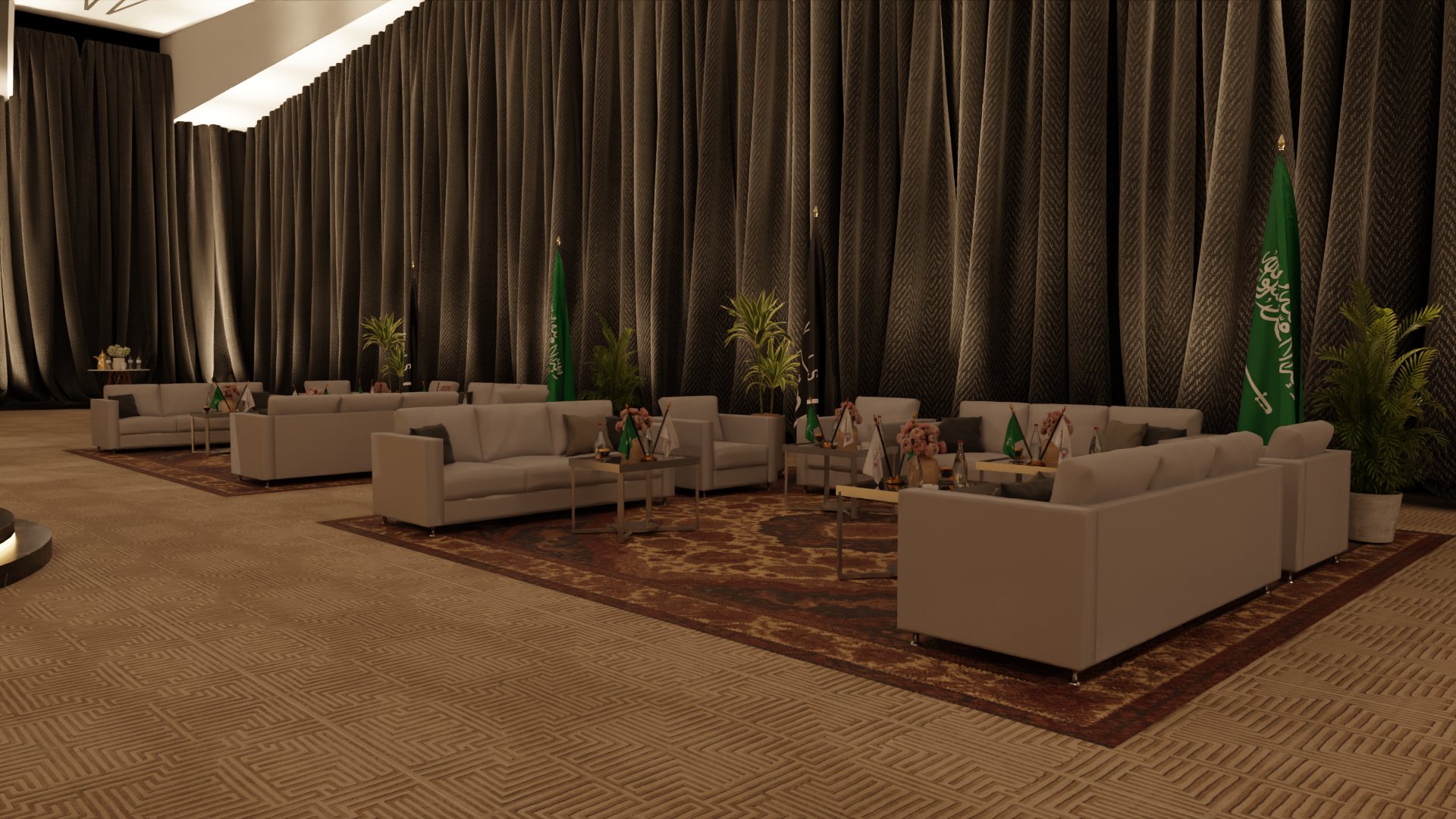
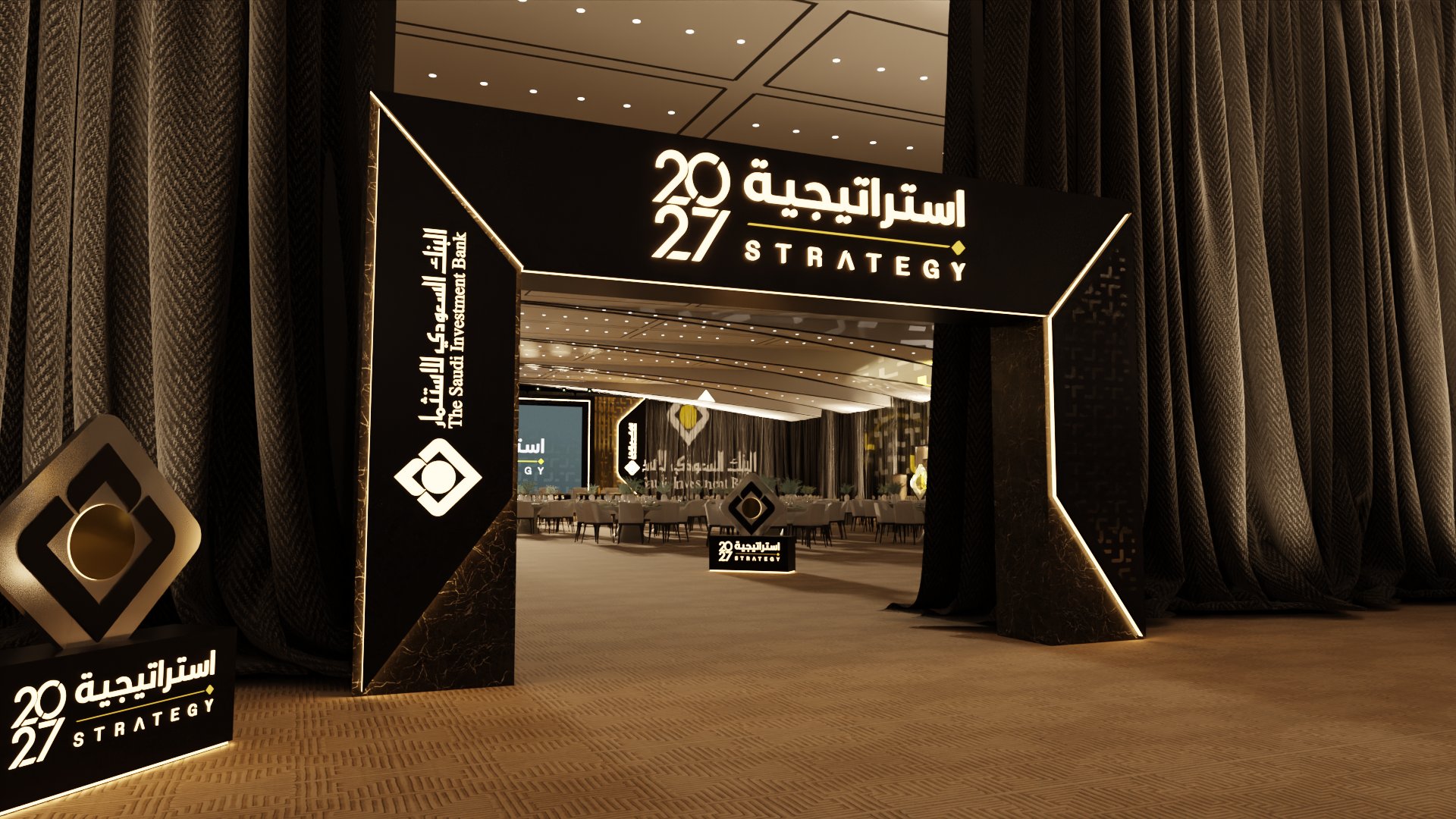
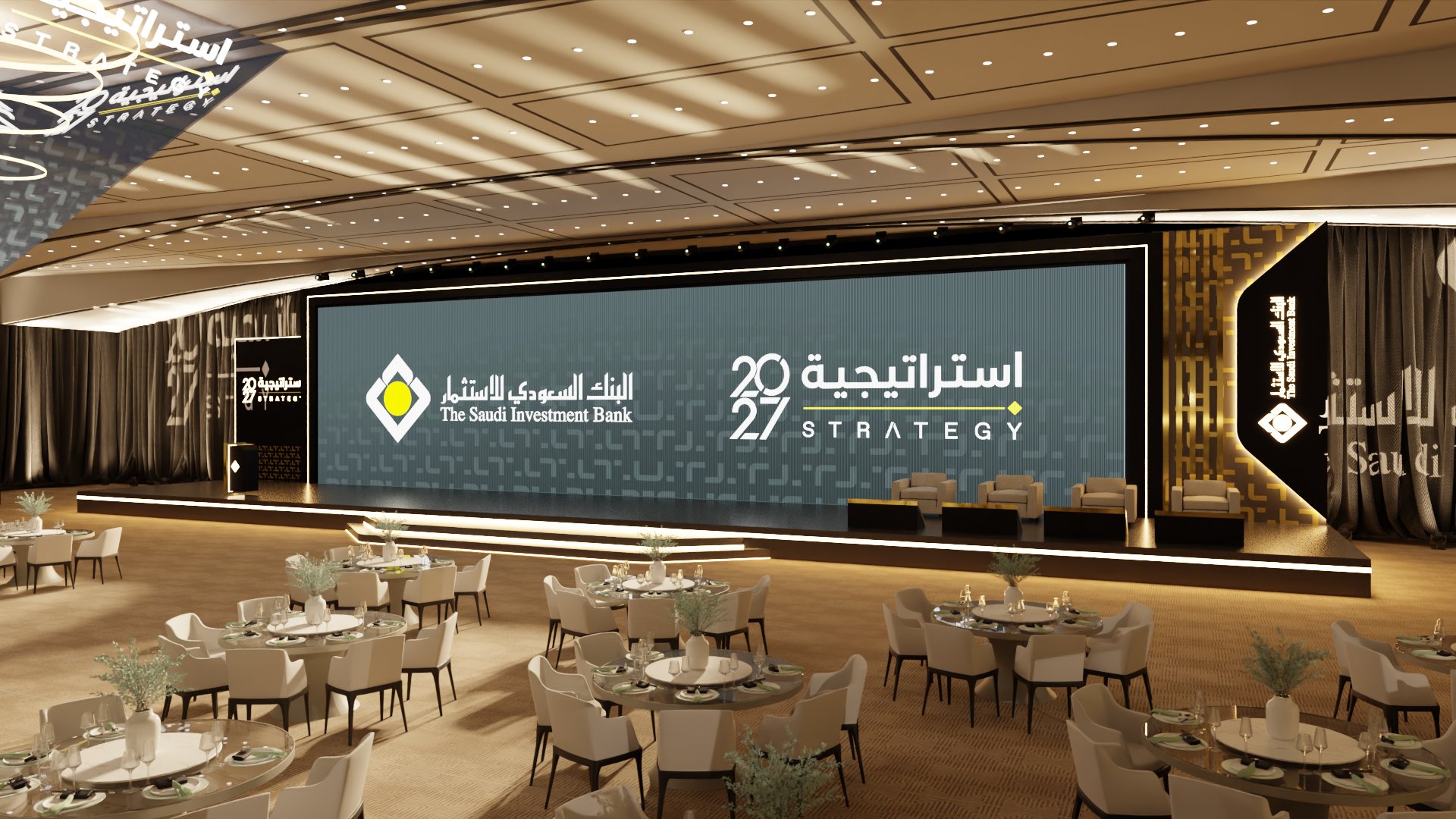
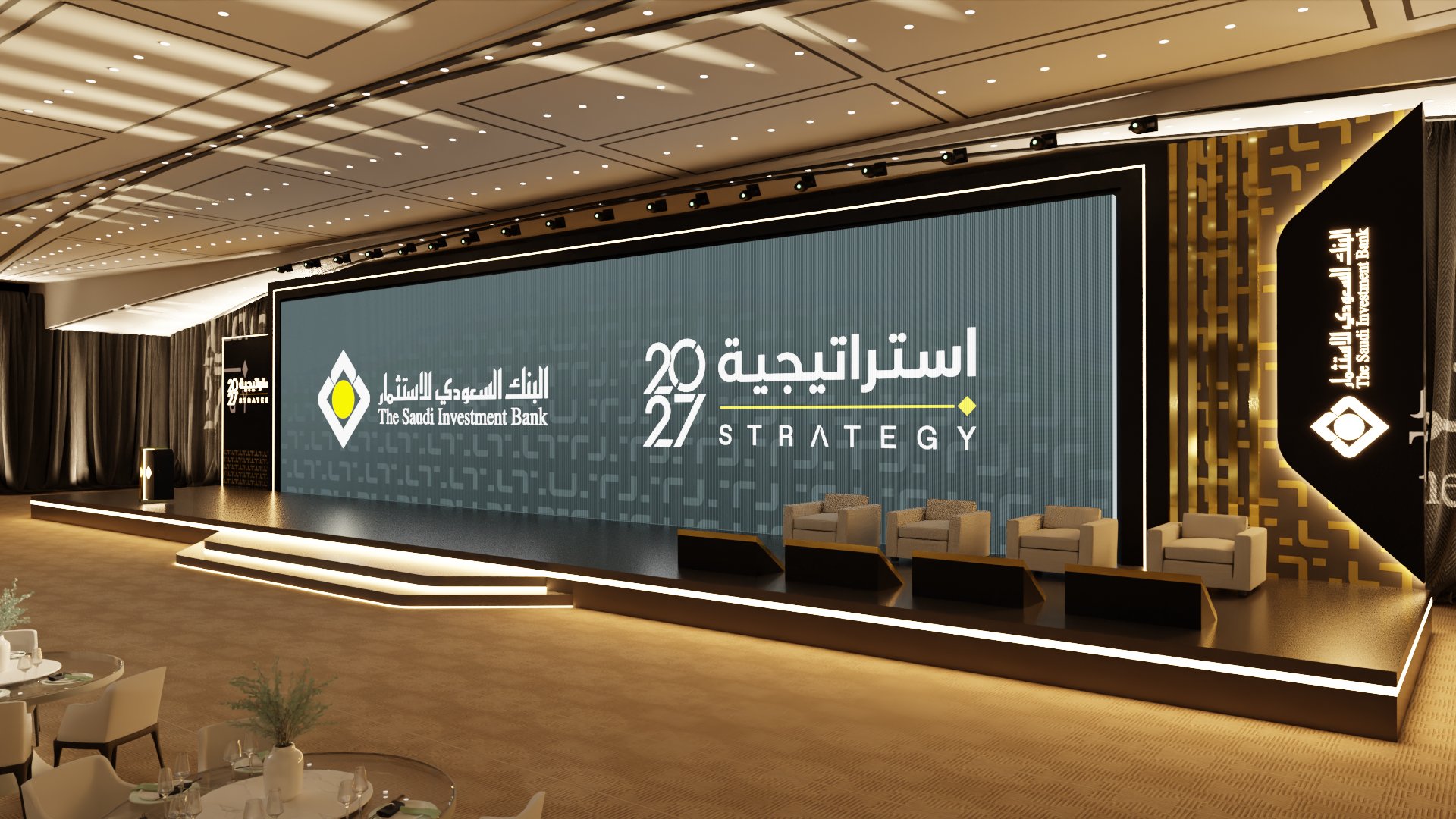
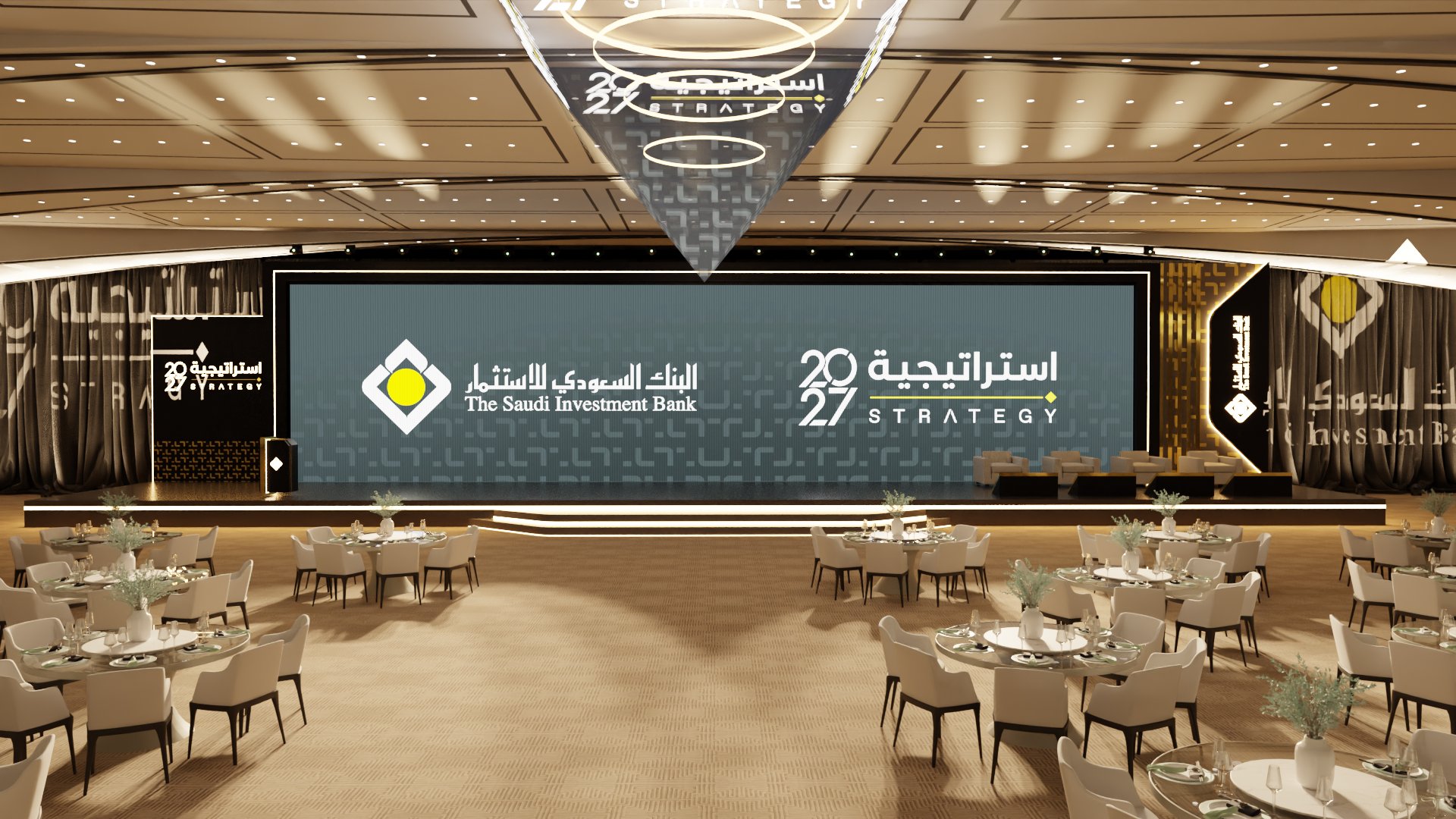
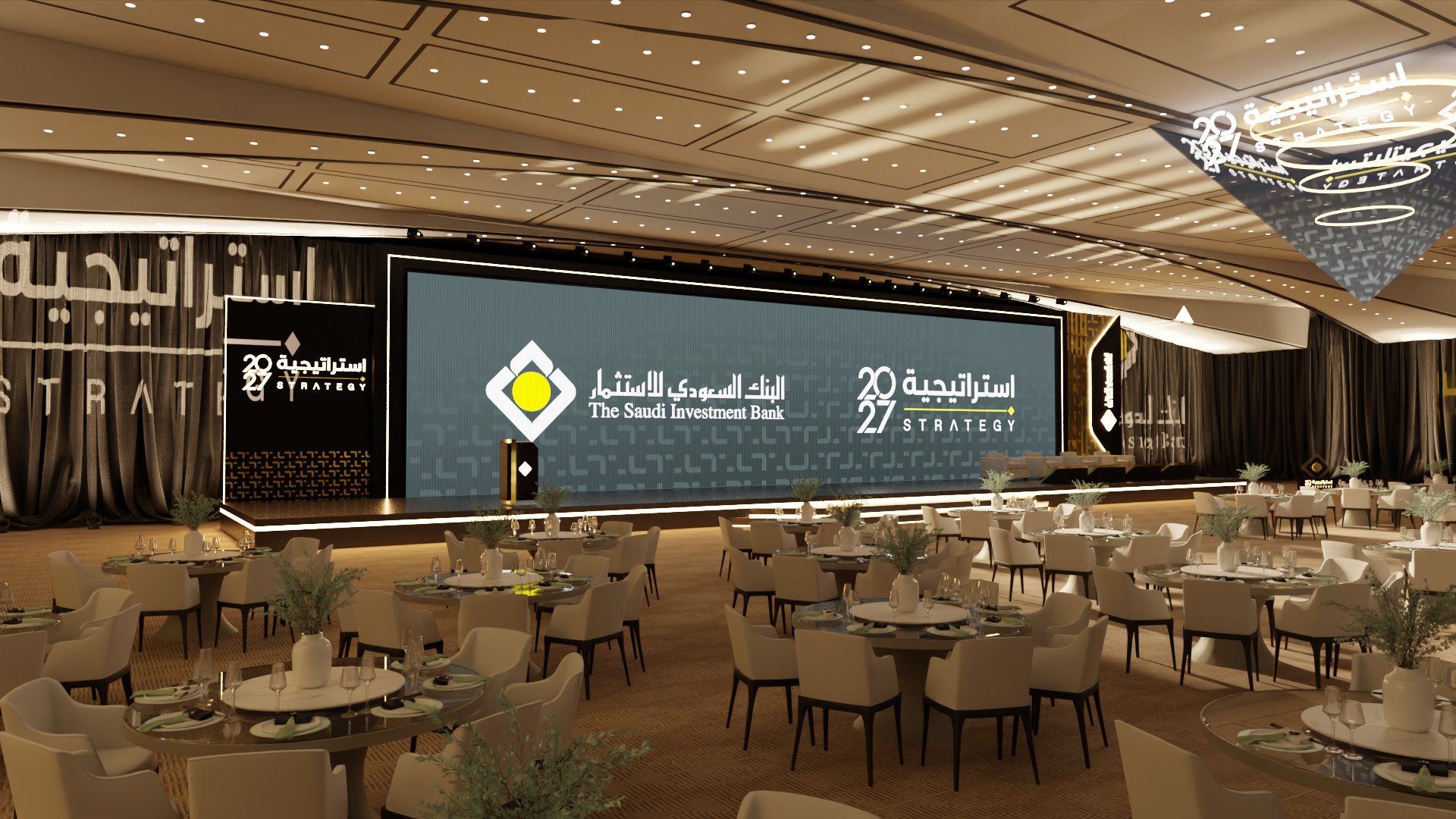
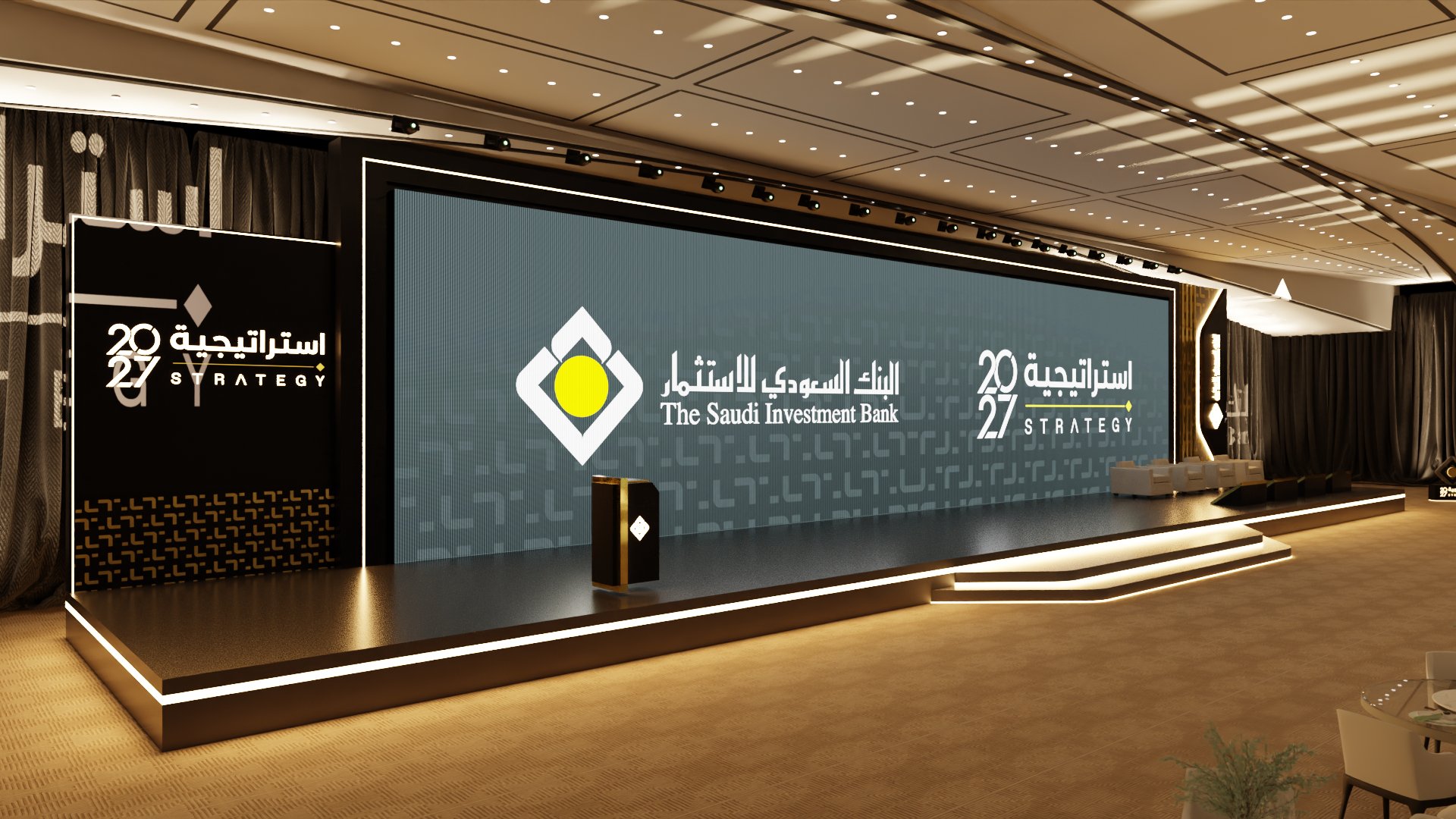
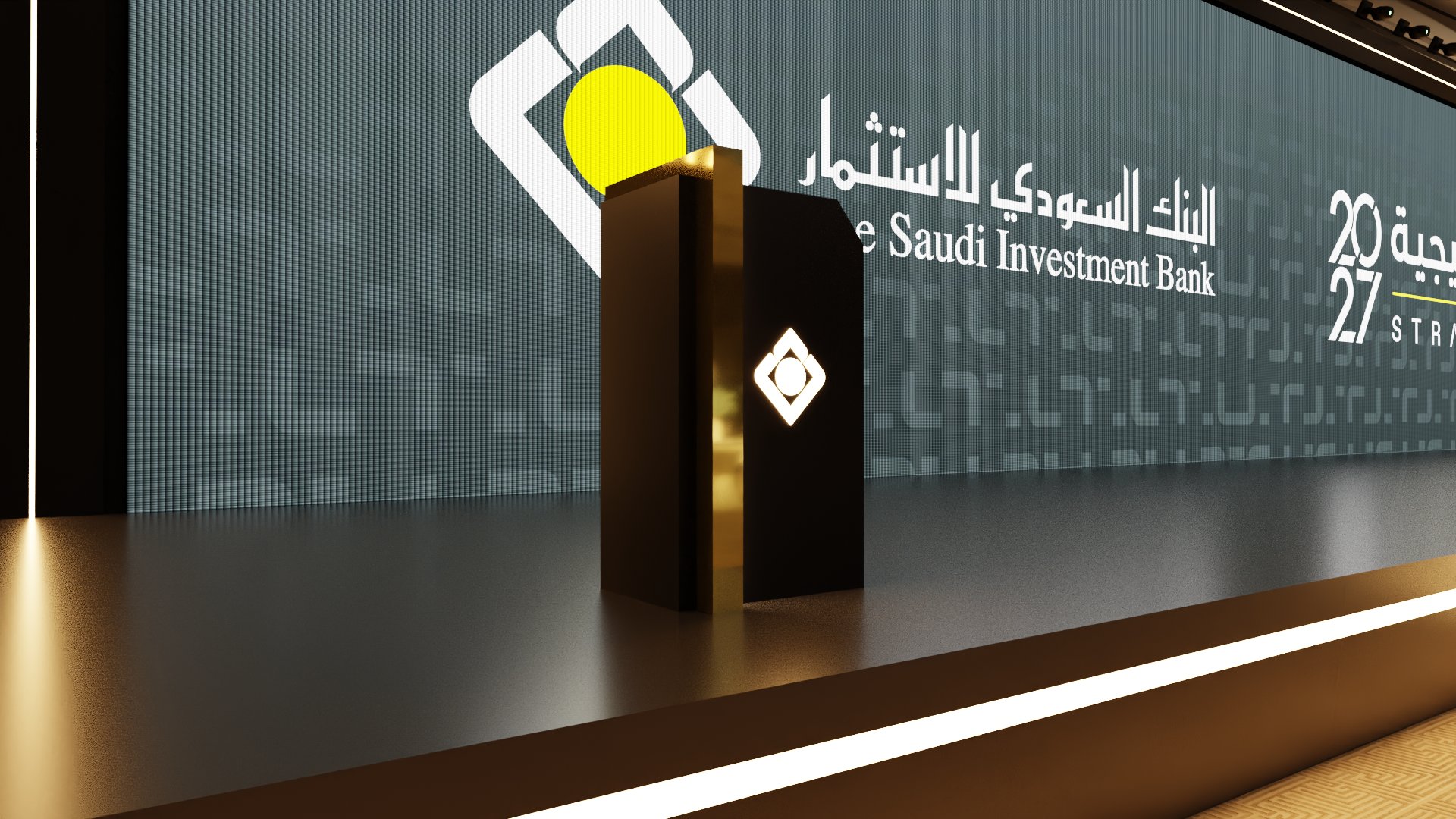

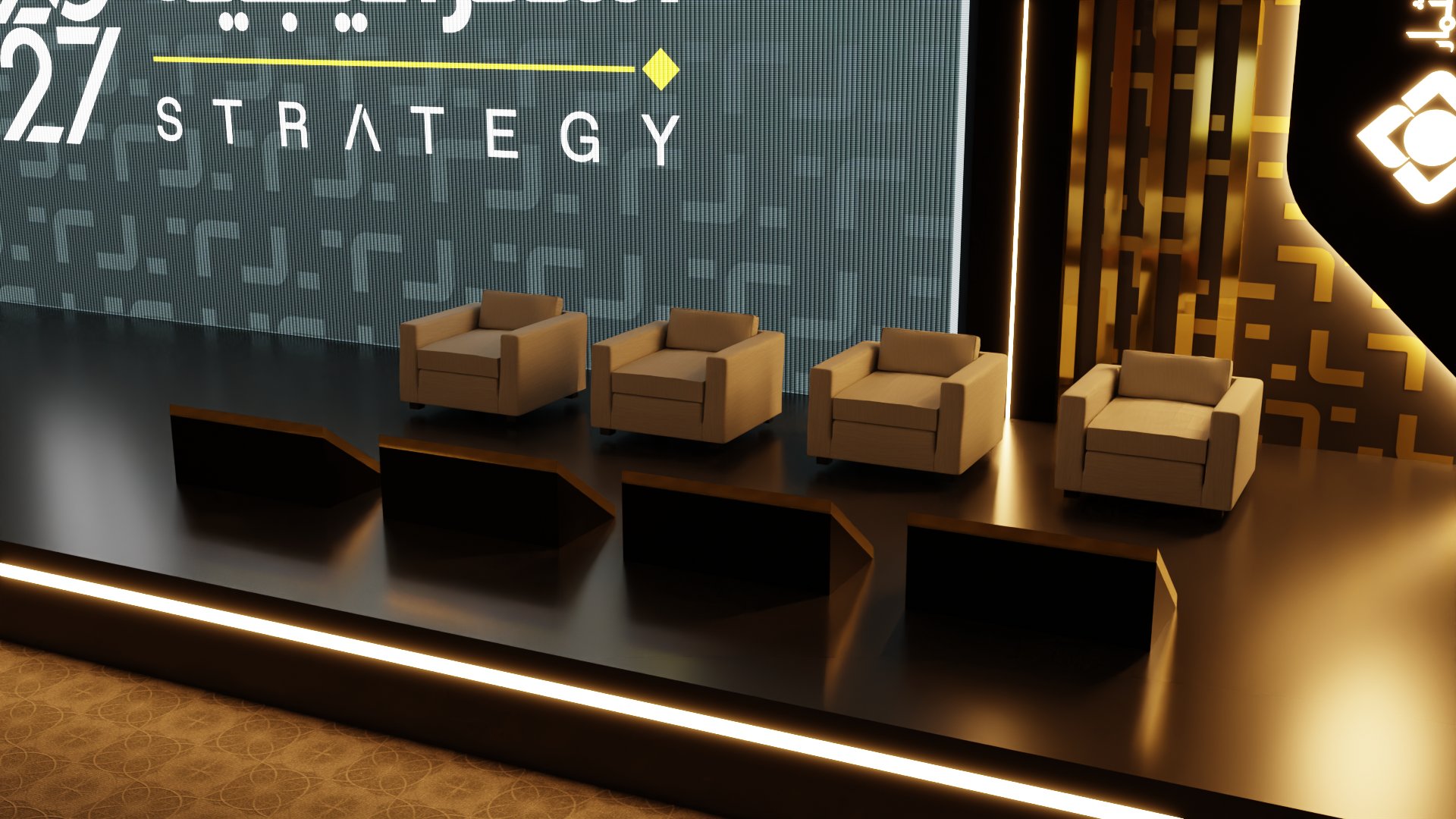
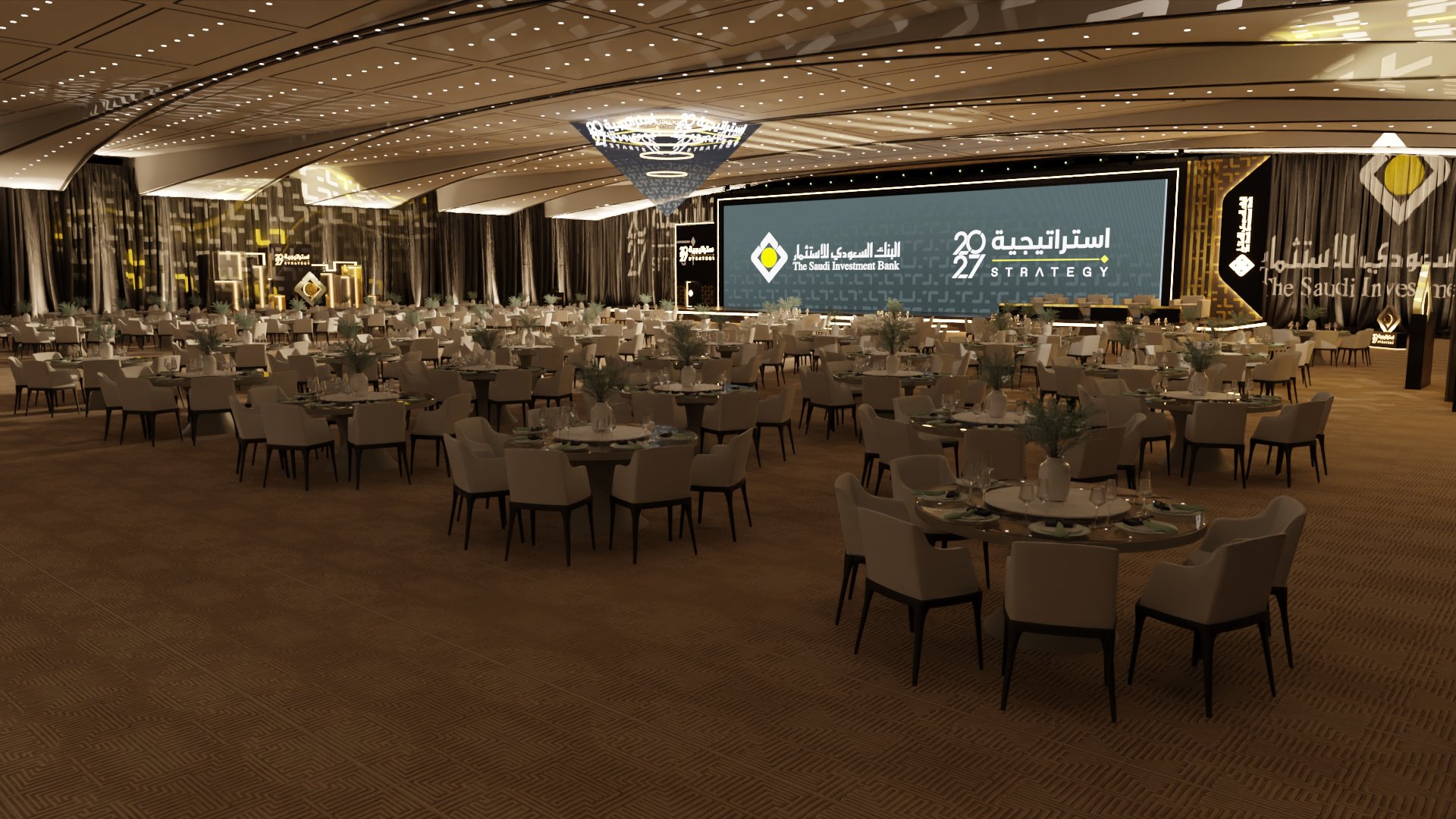
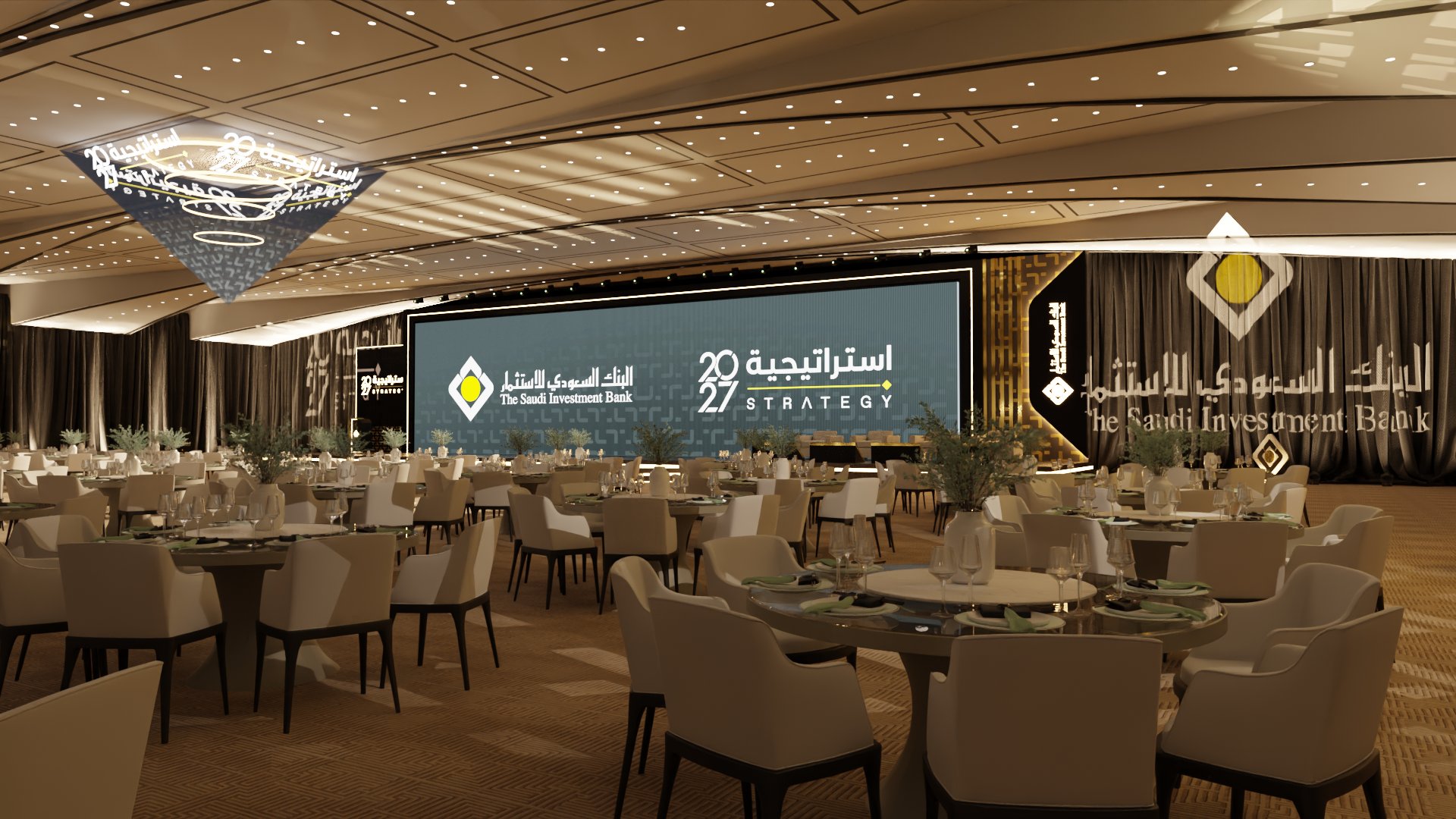
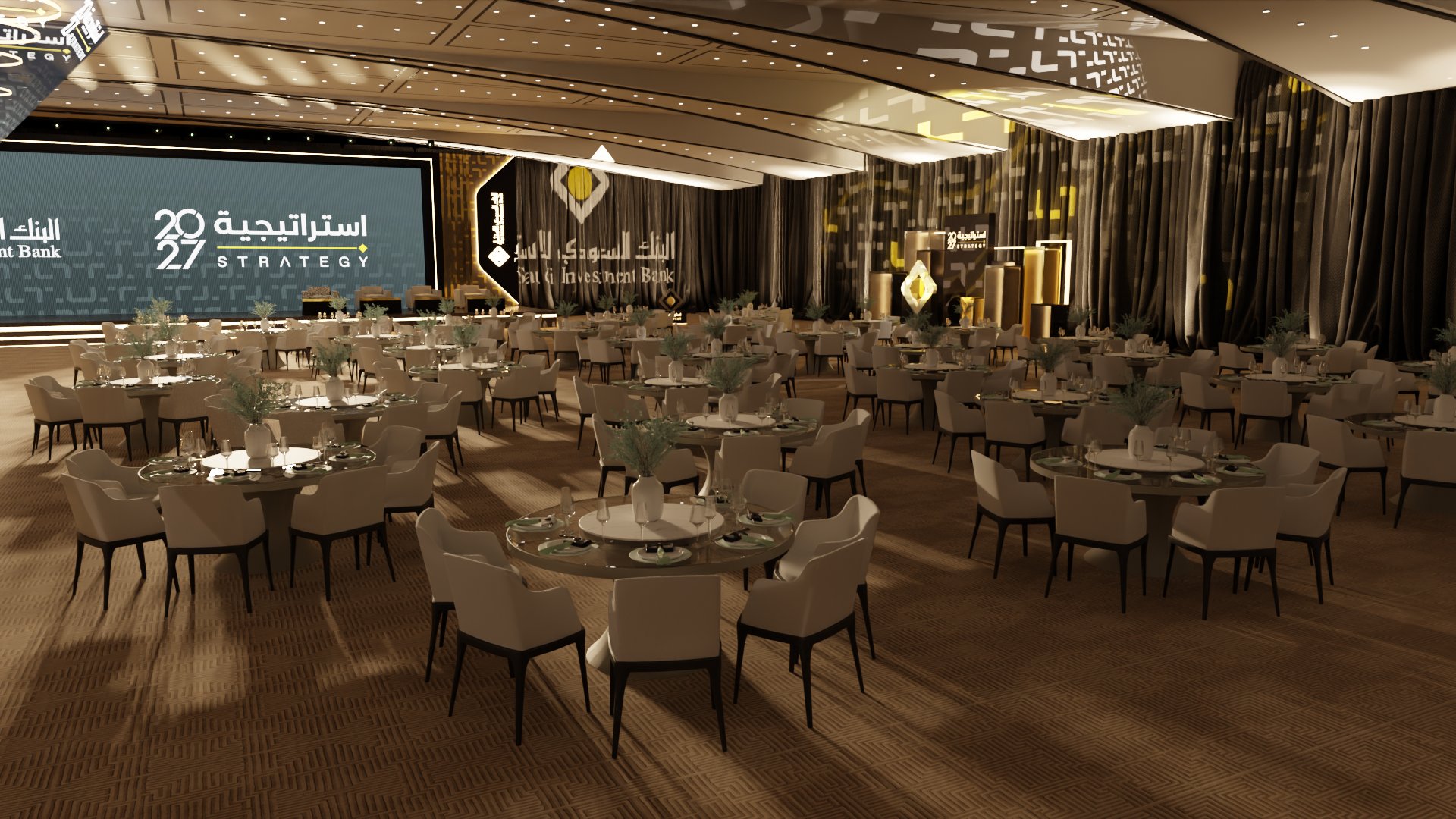
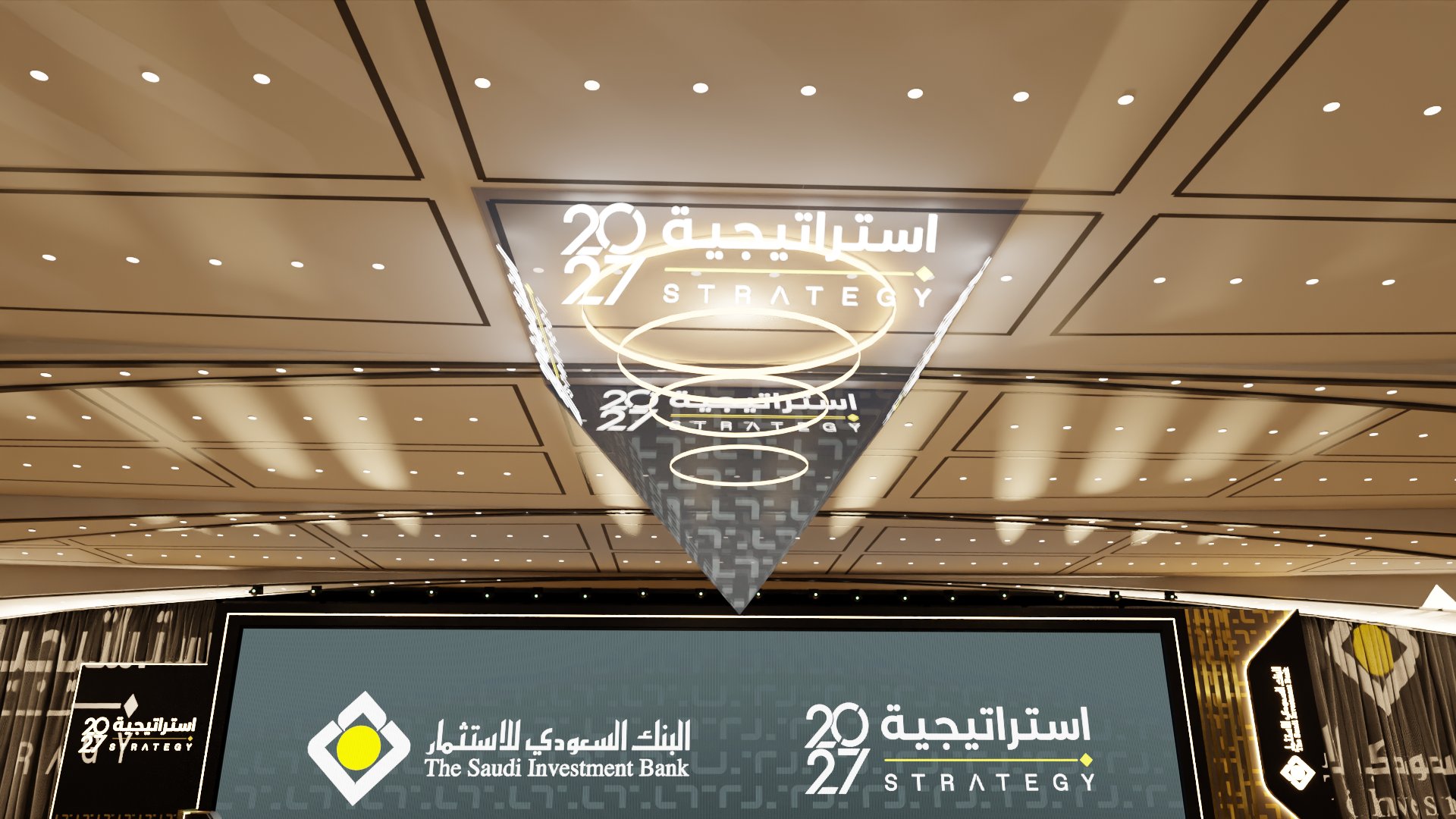
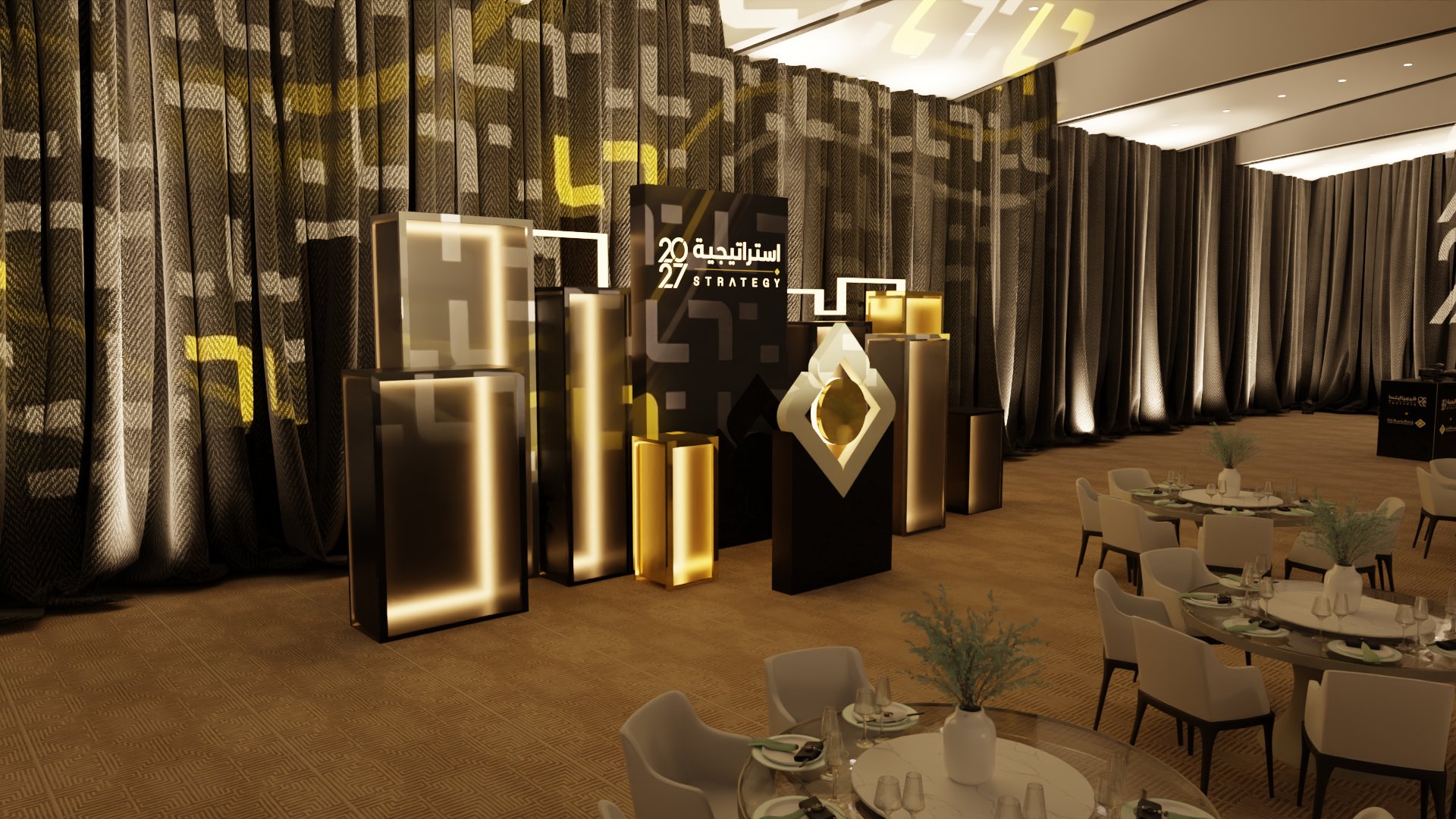
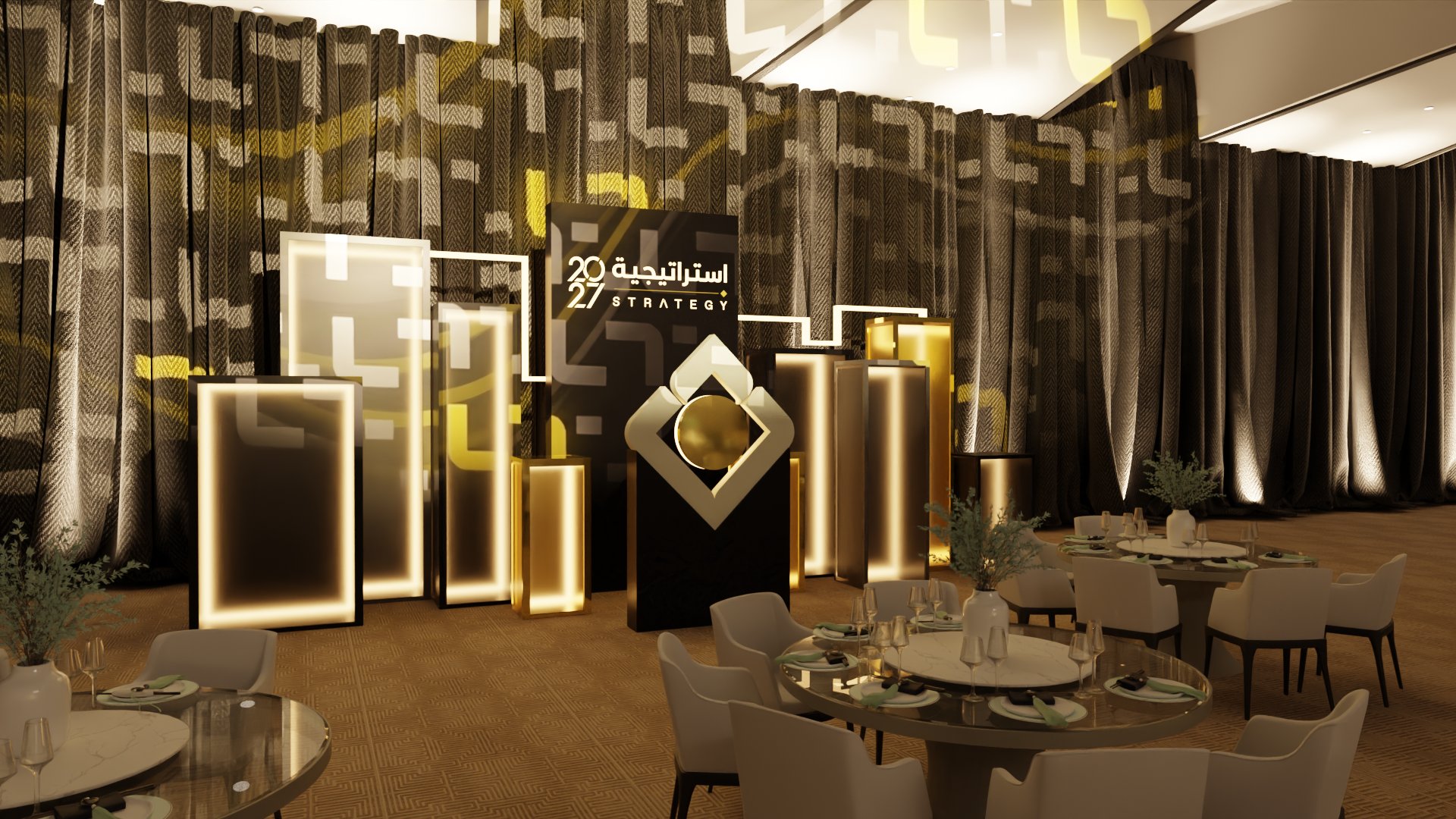
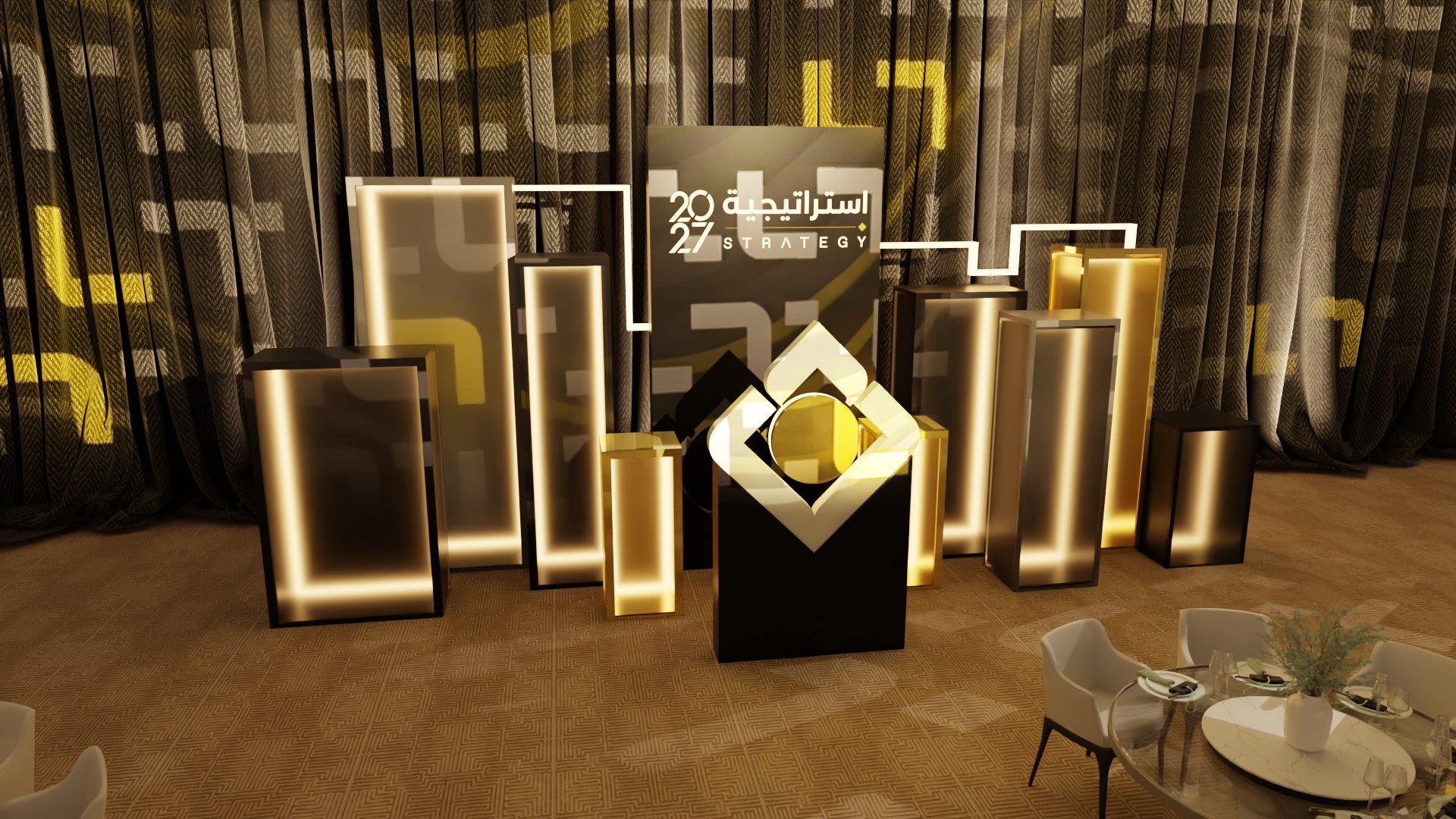
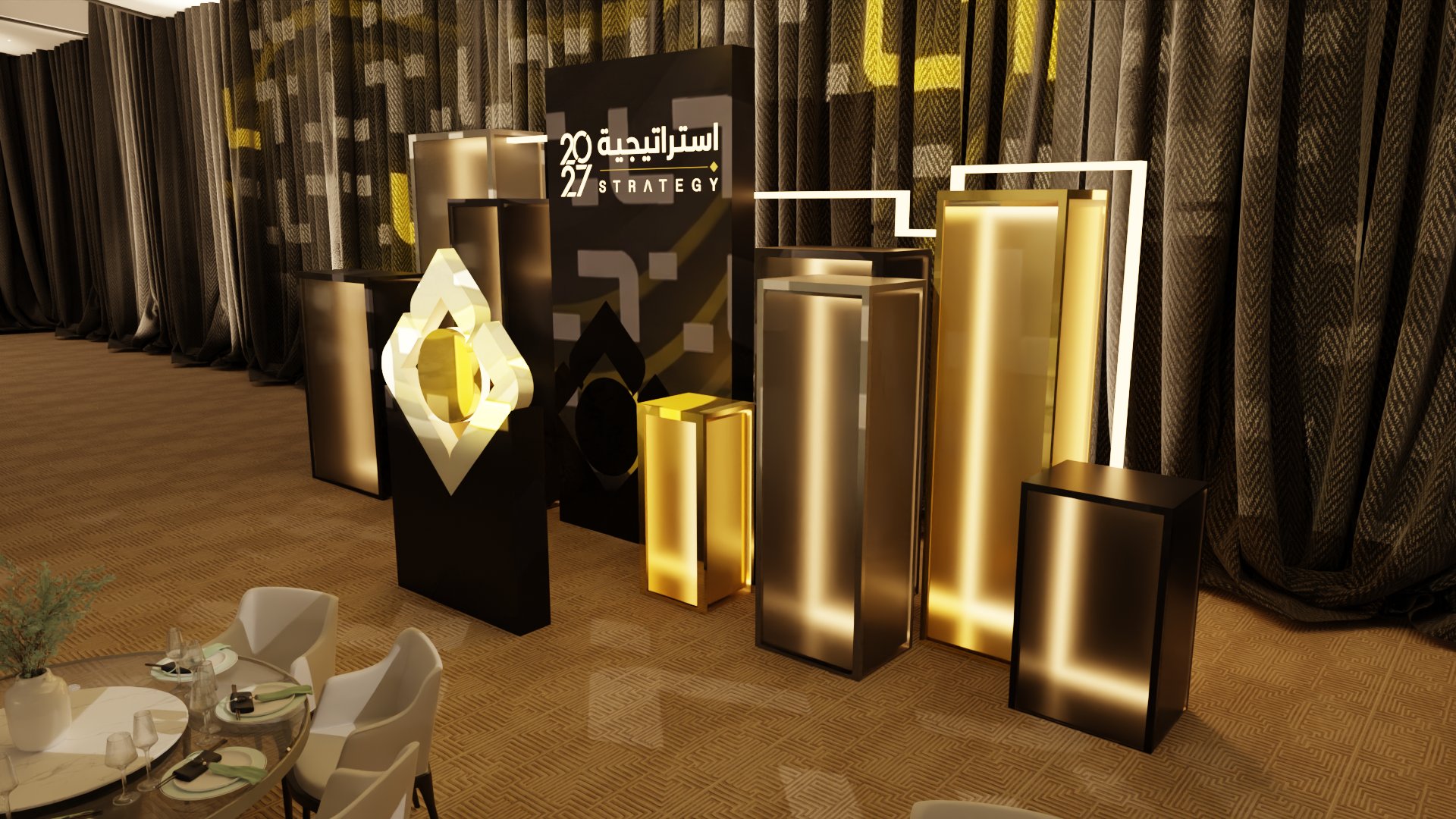
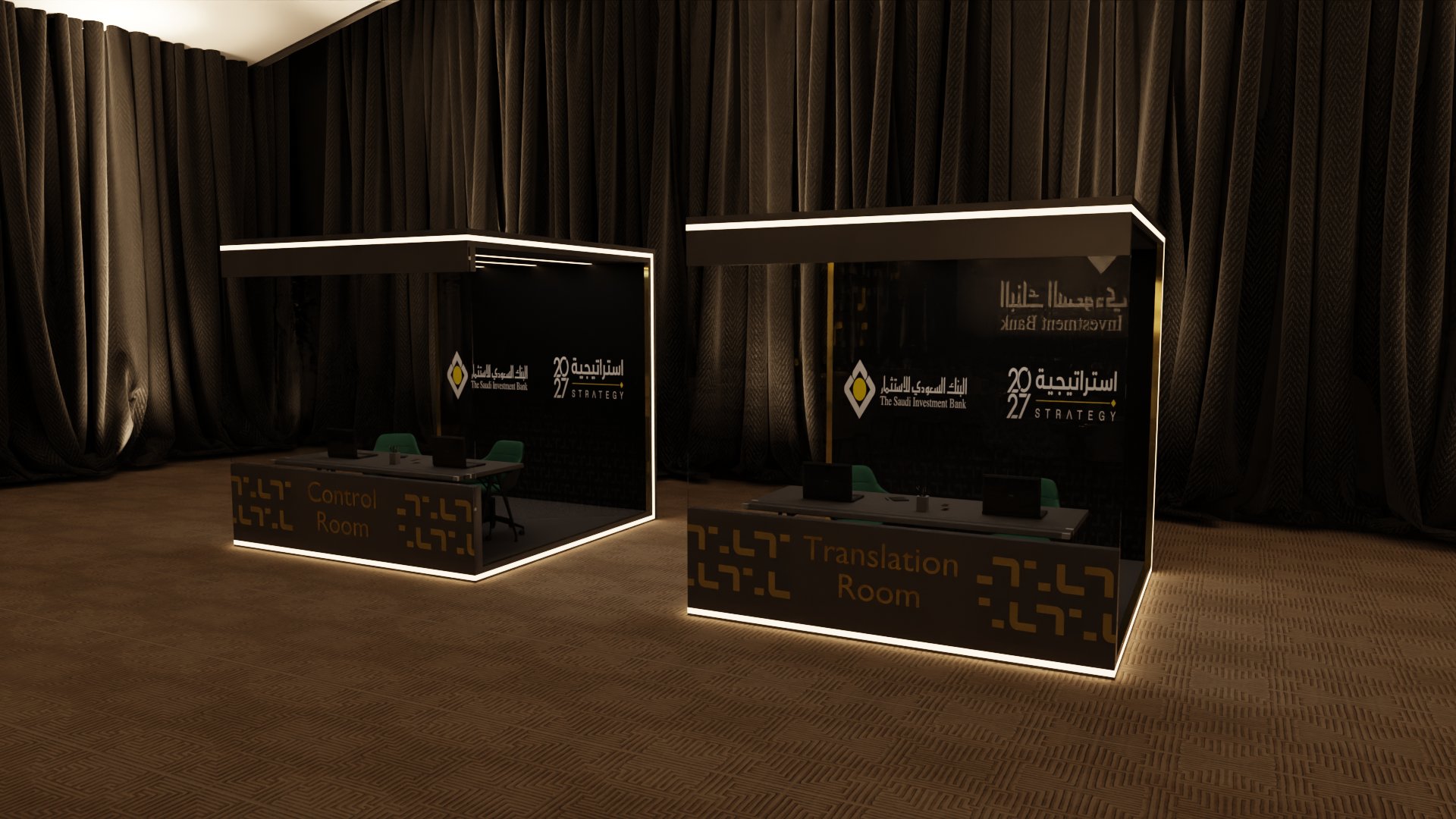
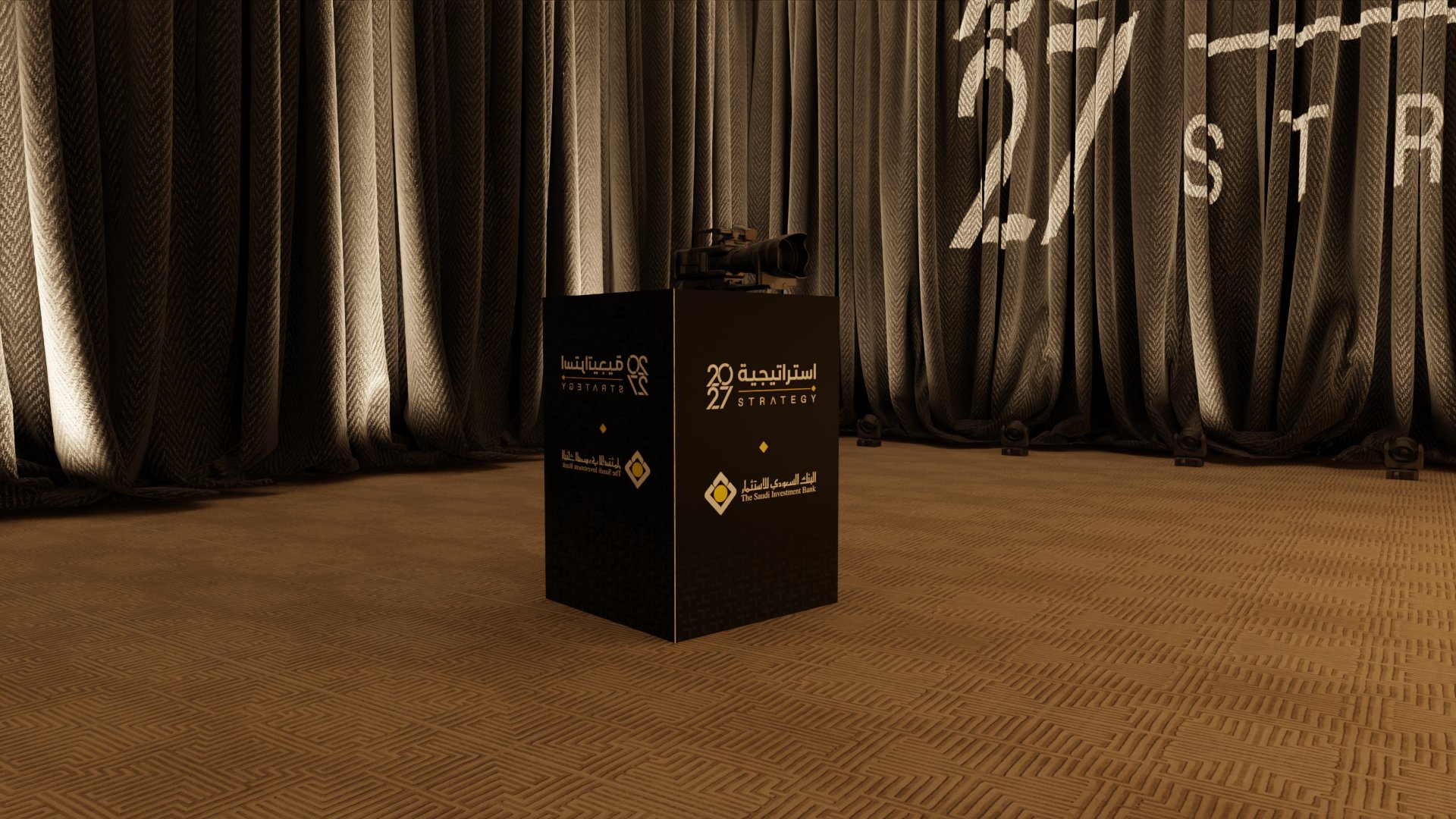
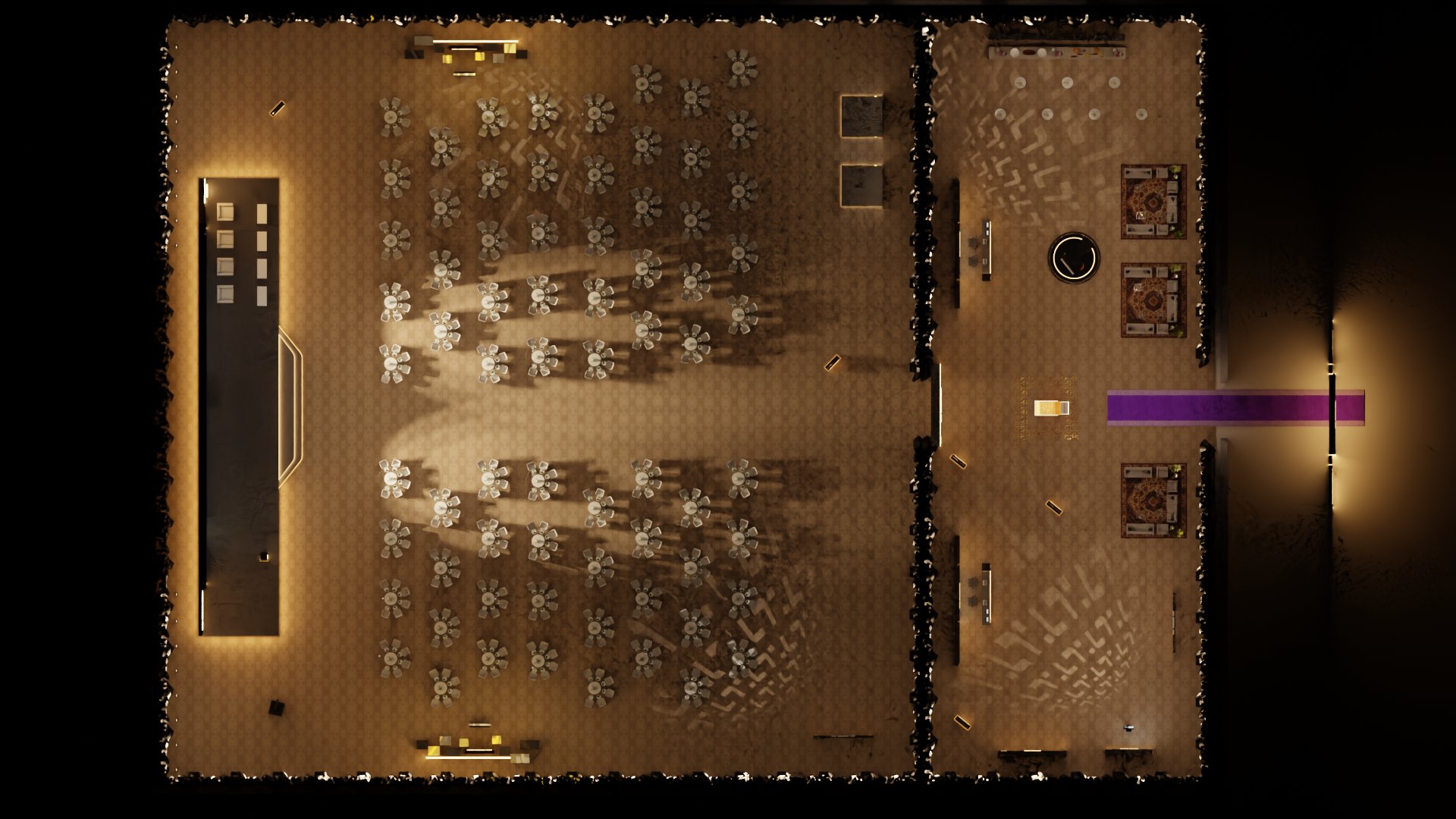
The attached visual concepts have been developed as preliminary conceptual designs that reflect Rodyan's understanding of the nature of the project and its requirements. They will be further developed and adapted in line with the final venue approved by the client and its technical specifications.
The proposed event elements represent an integrated executional translation of the approved creative concept. They have been organized under key pillars that ensure full coverage of all technical and operational requirements, while maintaining integration across production, technical, and guest-experience aspects — achieving a seamless event and high-quality execution.
In managing projects of this nature, Rodyan applies an integrated operational methodology built on the full Project Lifecycle, through which all phases of work are managed in an interconnected manner — from aligning the client's requirements through to executing and delivering the event to the highest quality standards.
This methodology is based on dividing the project into clear key phases that ensure planning precision, execution readiness, and full control over all elements, as follows:
In operating the event, Rodyan relies on an integrated system of operational plans working in concert to ensure highly efficient event management, control of attendee flow, and synchronization between the program and the operational elements — covering the main hall, the lobby area, and the dining hall, with an independent, high-priority operational track for VIP guests.
Ensure the management and coordination of all operational activities within a clear command structure and a unified control system that enables highly efficient event execution without conflicts or operational gaps.
Covers the management of all operational activities across the event zones (the lobby, the main hall, the dining hall), in addition to coordinating suppliers, technical and organizational teams, and hospitality services.
Ensure the smooth movement of attendees across all event zones by designing and managing clear paths that reduce congestion and enhance the guest experience, with an independent path dedicated to VIP guests.
Covers the management of attendee flow across entry points, registration, the lobby, the main hall, and the dining hall, with clear separation between VIP and general attendee paths.
Ensure the program is executed according to a disciplined timeline, achieving precise synchronization between the stage, the technical elements, and attendee movement — amplifying the event's impact and ensuring smooth operation.
Covers the management of all ceremony segments inside the main hall — including the stage, the Master of Ceremonies (MC), interpretation, and the technical elements — in addition to coordination with the timing of attendee transition to dinner.
Ensure integrated management of the event delivery cycle — from the approval of requirements and designs through to live operation — achieving full operational readiness and activating all event elements according to a disciplined sequence and clear control points.
Covers all stages of event activation, including requirements approval, planning, design, site setup (Lobby / Hall / Dining), operation, coverage, and closure.
| Phase | Mechanism | Control Point (Gate) |
|---|---|---|
| Requirements Alignment | Reviewing the client's requirements and linking them to the elements | Requirements approval |
| Planning | Preparing the execution and operations plan | Plan approval |
| Design | Developing and approving the designs | Design approval |
| Readiness | Preparing the site and systems | Readiness verification 5 hours prior |
| Operation | Managing the event | Real-time operation monitoring |
| Coverage | Executing the filming | Quality verification |
| Closure | Delivering the outputs | Final delivery approval |
Ensure consistent, high-quality execution of all event elements by applying quality assurance and quality control mechanisms across all project phases.
Covers the quality of production, setups, technical systems, the attendee experience, and media coverage.
| Phase | Approval Gate |
|---|---|
| Before execution | Plan and design approval |
| Before the event | Site readiness |
| During execution | Operational continuity |
| After execution | Deliverables approval |
Identify and manage risks proactively to ensure operational continuity and minimize the impact of any challenges on the event.
Covers operational and technical risks, attendee flow, the VIP experience, and dinner service operation.
| Risk | Likelihood | Impact | Action |
|---|---|---|---|
| Registration congestion | Medium | High | Deploying additional points |
| Technical failure | Low | High | Immediate technical support |
| Program delay | Medium | Medium | Adjusting the Run of Show |
| Dinner-service pressure | Medium | Medium | Organizing entry |
The governance and operating plans will be developed and detailed in greater depth during the later phases of the project, in coordination with the client — including the preparation of detailed executable versions of each plan, and their alignment with the approved venue, the final event program, and the precise operational requirements.
| Phase | Period | Scope of Work |
|---|---|---|
| 1. Project Initiation & Alignment | October 3 – 5 | Holding coordination meetings with the client, analyzing the event requirements, approving the scope of work, identifying the venue, and linking all event elements to their operational and experiential objectives |
| 2. Planning & Design | October 5 – 9 | Preparing the execution and operations plan, developing and approving the designs and visual concepts, layout planning (Lobby / Main Hall / Dining), and identifying the operational and technical resources |
| 3. Setup & Readiness | October 10 – 14 | Executing production and decor works, preparing the stage, installing the technical systems (sound, lighting, screens), preparing the lobby areas (registration, engagement), and preparing the dining hall (VIP / General), with comprehensive testing of all elements |
| 4. Final Readiness & Rehearsal | October 15 | Conducting a comprehensive operational rehearsal (Full Run-Through), testing synchronization between the program and the technical elements, verifying the readiness of all zones, and ensuring complete operational readiness ahead of the event date |
| 5. Event Execution & Operations (Event Day) | October 16 | Executing the event according to the approved operating plans, managing main-hall operations, organizing attendee movement in the lobby, managing the dining experience (VIP / General), and controlling synchronization between the program and the attendee experience |
| 6. Closure & Handover | October 17 | Dismantling the setups, restoring the venue, reviewing performance, and documenting and delivering all final outputs and reports |
This timeline has been prepared as a preliminary planning framework. It will be updated and detailed in line with the final approved date of the event, and aligned with the venue requirements, the executive program, and the detailed operating plans.
| Time | Activity | Operational Description |
|---|---|---|
| 05:00 – 06:00 PM | Guest Reception | Receiving attendees in the lobby area, activating the registration points, and guiding guests along the designated paths |
| 06:00 – 06:30 PM | Registration & Entry | Completing registration procedures, managing attendee flow, and directing guests to the main hall |
| 06:30 – 06:45 PM | Pre-Ceremony Preparation | Guests settling into their places, playing ambient music, and finalizing stage readiness |
| 06:45 – 07:00 PM | Opening | Ceremony opening, welcome address, and program introduction |
| 07:00 – 08:15 PM | Main Ceremony Segments | Delivering the program (shows – speeches – visual content), with controlled synchronization of sound, lighting, and content |
| 08:15 – 08:30 PM | Ceremony Close | Closing the main program in an organized manner and preparing the transition to dinner |
| 08:30 – 09:30 PM | Dinner | Organizing attendee transition to the dining hall, activating the service (VIP / General), and managing attendee flow |
| 09:30 – 10:00 PM | Closure & Departure | Ending the event, organizing guest departure, and ensuring a positive closing experience |
This schedule has been prepared as a preliminary organizational model reflecting the sequence of the event day. The detailed executable version of the schedule will be prepared after the final agenda is approved, ensuring full synchronization between the program segments, the attendee experience, and the operational requirements.
This section outlines the project's final deliverables, which represent the outcome of executing all event elements. They have been categorized according to their nature to ensure clarity of the delivery scope and its direct link to the project requirements.
Rodyan adopts a PMO-driven organizational structure that ensures central oversight and full control over execution, with specialized teams distributed according to the event's zones and their operational functions — achieving high coordination efficiency and speed of decision-making.
 Thank You